Home Blog Page 4

How to Get an Internship in the USA as a Student

0

Finding an internship in the USA can feel confusing.
  Deadlines rules and visas make it harder.
  But internships solve two big problems.
  They give work experience.
  They boost your resume.

Start early. Don’t wait.
  The earlier you apply the better your chances.
  This guide keeps it simple.
  No fluff. No hype.
  Just clear steps to get your internship.

Why Students Look for Internships in the USA

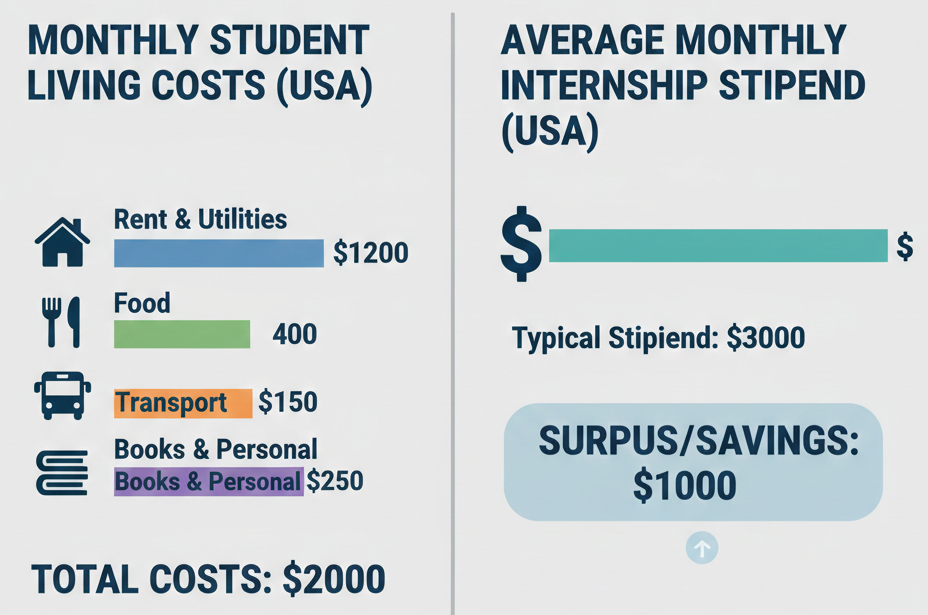
Tuition alone doesn’t cover life.
  Rent, food, and books pile up.
  Most students need extra income.

Internships do more than pay.
  You learn real-world skills.
  You make professional contacts.

Internships in the USA

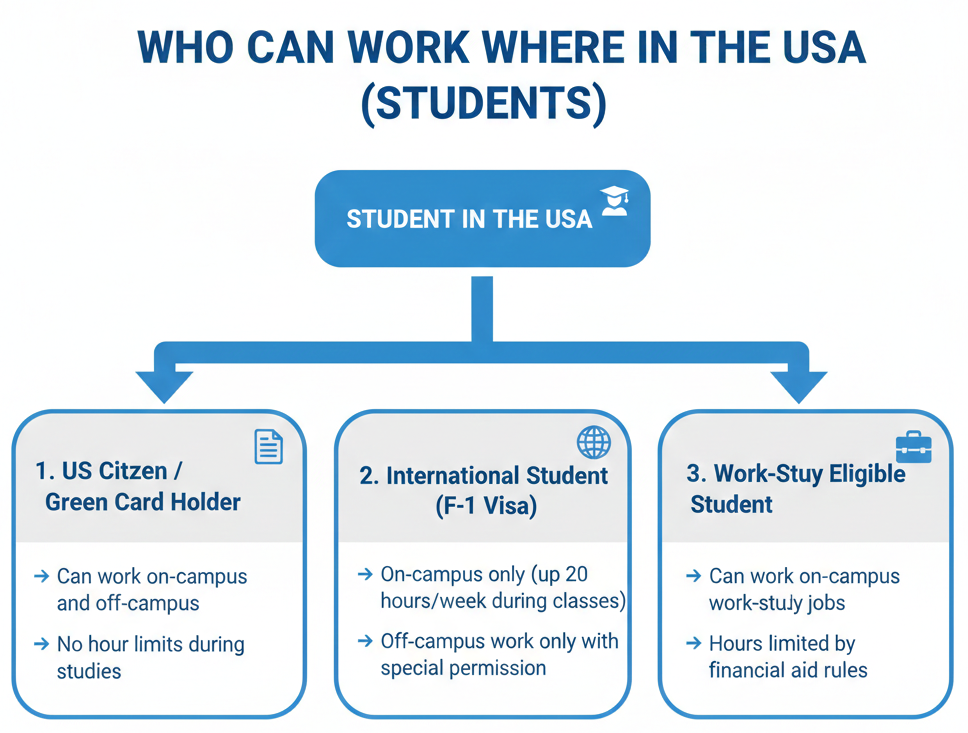
Who Can Work in the USA?

Rules matter. Break them, and it’s trouble.
  US citizens and permanent residents have fewer limits.
  International students follow visa rules.

F-1 students usually work on campus first.
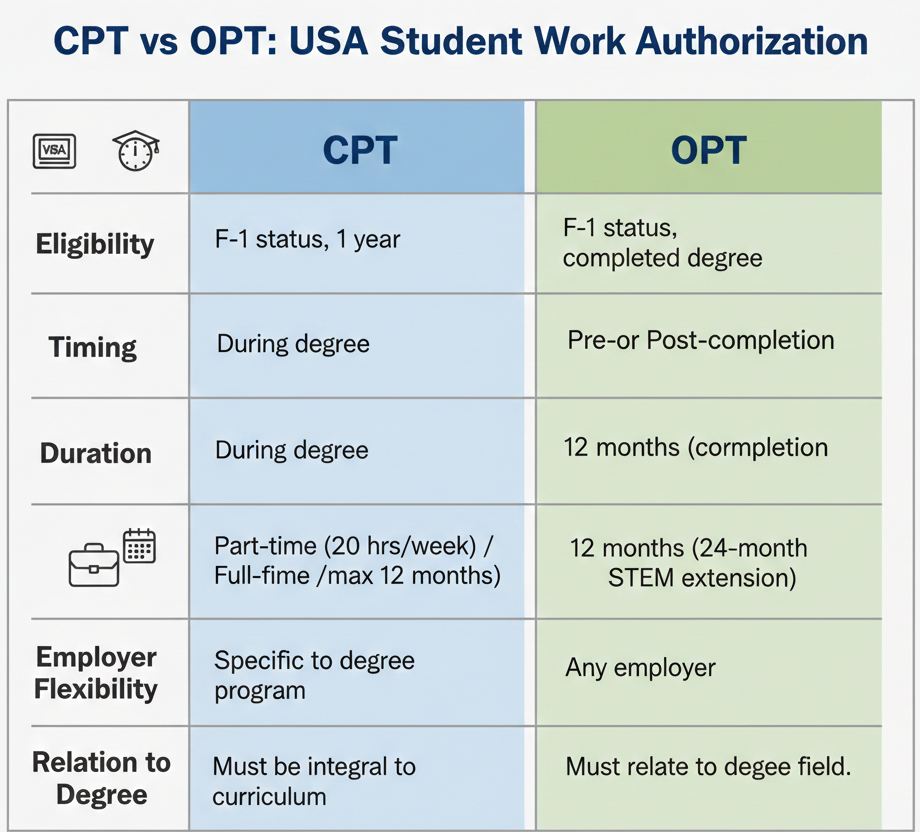
  Off-campus work needs CPT or OPT approval.

Campus Internships for International Students

Campus internships are the safest option.
  They follow visa rules.
  Hours are usually 20 per week during semesters.

Jobs are close to classes.
  Time spent commuting drops.
  Supervisors understand exams and deadlines.

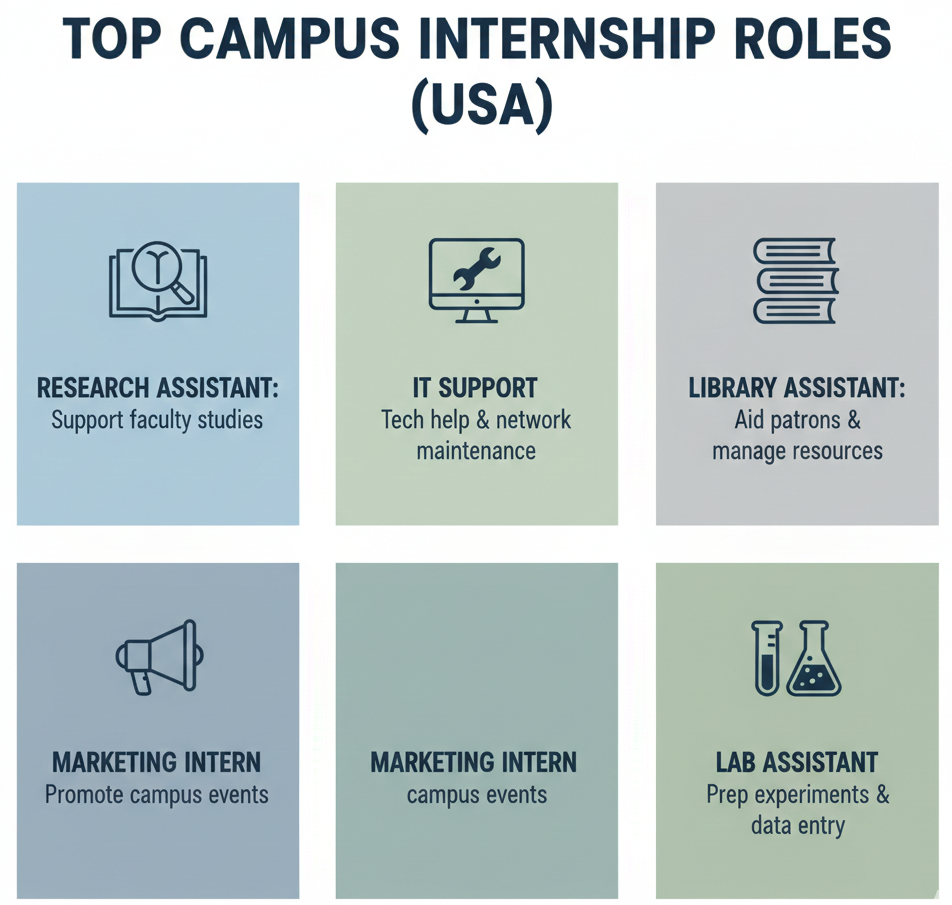
Common roles:

  • Library assistant
  • Lab helper
  • Cafeteria staff

Pay is modest but steady.
  Work hours are predictable.
  First-year students benefit the most.

Internships in the USA

Work-Study Programs

Work-study programs are federally funded campus jobs.
  You earn money while studying full-time.
  Some jobs match your field of study.

Not every student qualifies.
  Financial aid forms decide eligibility.
  Approval comes before placement.

Hours are capped.
  Income won’t cover everything.
  But it reduces loan pressure.

Off-Campus Flexible Internships

Flexibility matters. Classes change weekly.
  Rigid schedules don’t work.

Flexible options include:

  • Retail
  • Cafes
  • Delivery roles

Evening and weekend shifts help.
  Shift swaps give control.
  Retail teaches people skills.
  Food service builds speed.
  Delivery teaches time management.

International students must confirm legal clearance first.
  Mistakes can affect visa status.

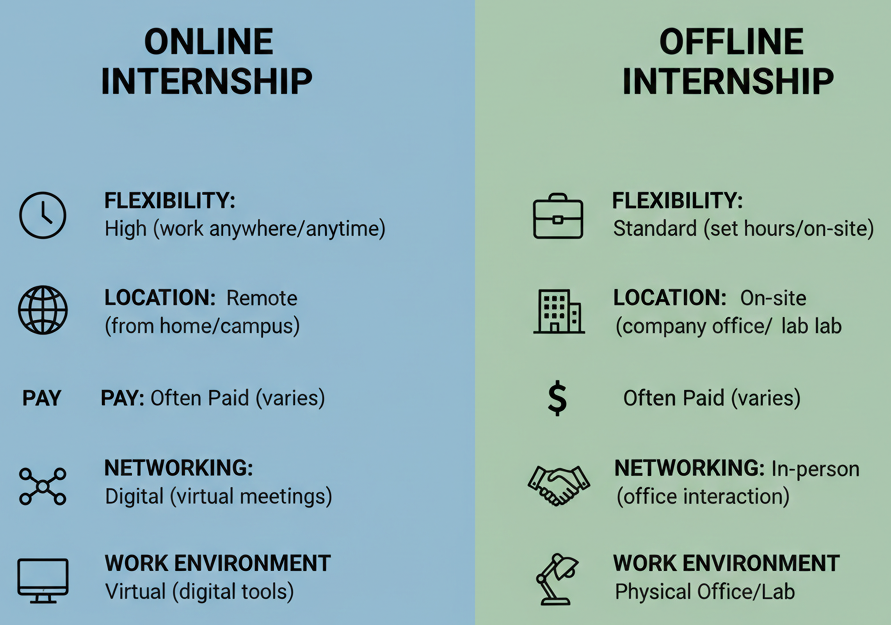
Online Internships

Online internships save travel time.
  No fixed shifts. Work from anywhere.

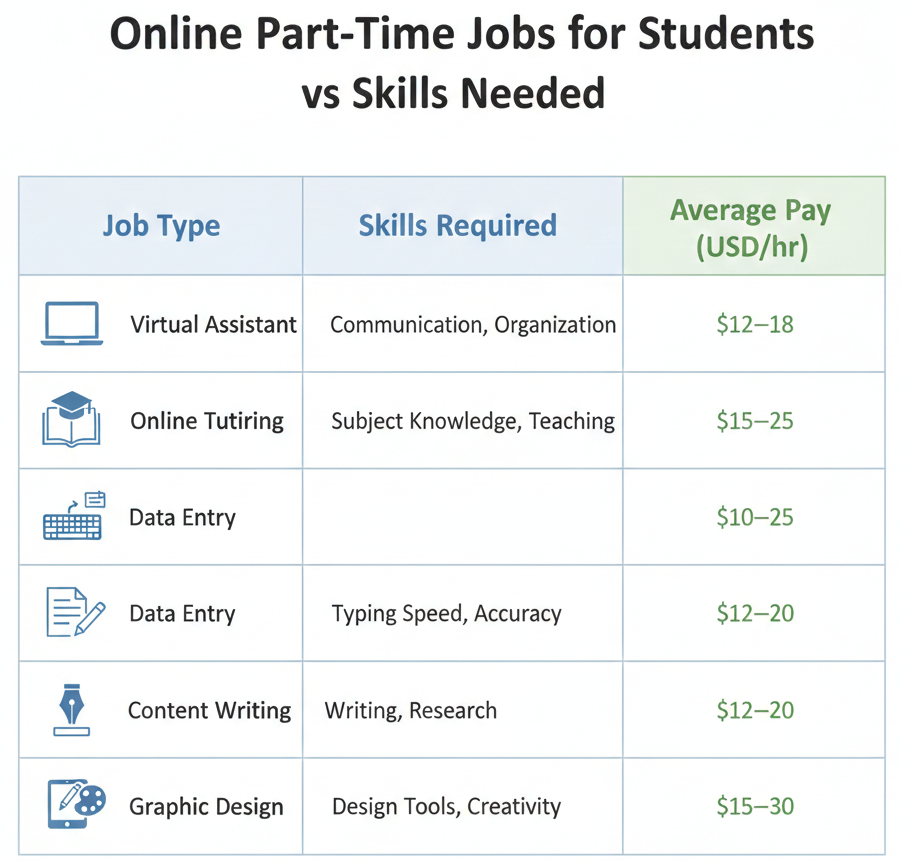
Popular online roles:

  • Virtual assistant
  • Content support
  • Tutoring
  • Data entry

Pay depends on skills.
  Internet issues can slow work.
  Avoid fake offers. Real jobs pay you, not the other way.

Internships in the USA

Internship Opportunities by Skill Level

Skill level affects pay.

No-skill jobs:

  • Store helper
  • Cleaner
  • Food runner
      Pay is low but easy.

Skill-based jobs:

  • Tutoring
  • Coding help
  • Design support
  • Writing tasks
      Pay is higher.
      Experience compounds.

Pick roles matching your current skills.
  Consistency beats stress.

Best Paying Part-Time Internships

Pay matters. Time is limited.
  High hourly rates help.

  • Tutoring pays well.
  • Tech support pays more with skills.
  • Campus research roles are steady.
  • Night or weekend shifts sometimes add bonuses.

Balance pay with health.
  Burnout kills grades.
  Grades decide long-term success.

How Many Hours Should You Work

Most students do best with 10–20 hours per week.
  Grades drop after 25 hours.

Start small.
  Track your energy.
  Adjust after midterms.
  During breaks, you can increase hours.

Always check visa and school limits.

How to Apply for Internships Fast

Speed matters. Rent and bills don’t wait.
  Scattershot applications fail. Focus wins.

Start with college career portals.
  Visit offices. Speak to supervisors.
  Use job boards. Ask classmates.
  Referrals beat cold applications.

Prepare a short, one-page resume.
  List clear availability.

Resume Tips

Keep it clean. Skip fancy designs.
  Clarity wins.

List availability.
  Mention teamwork experience.
  Highlight reliability.

No experience? Add:

  • Volunteer work
  • Class projects

One typo can kill chances.
  Proofread twice. Then apply.

Cover Letter Tips

Short and simple works best.
  Explain why you want the internship.
  Mention skills and contribution.

Keep it one page. Start strong in the first 2 lines.
  Personalize each letter. Avoid copy-paste.

Networking Tips

Networking works better than cold applications.
  Talk to alumni and professors.
  Connect on LinkedIn politely.
  Ask about openings.

Referrals improve chances significantly.

Interview Tips

Prepare well.
  Companies do video or in-person interviews.

Behavioral questions are common.
  Use the STAR method: Situation Task Action and Result.
  Technical questions may apply to STEM fields.

Visa and Work Authorization

Legal status is mandatory.

F-1 students:

  • CPT for current internships
  • OPT after graduation

Check eligibility before applying.
  Employer guidance may help, but responsibility is yours.

Internships in the USA

Making the Most of Your Internship

Take feedback actively.
  Ask questions.
  Show initiative with small projects.

Document achievements.
  These strengthen resumes.
  They help with future job applications.

Common Mistakes Students Make

Applying at the last minute.
  Generic resumes.
  Ignoring visa rules.
  Overworking and burning out.
  Falling for fake offers.

Planning avoids regret. Ask questions early.

Balancing Internship, Study, and Life

Life has three legs:

  • Study
  • Work
  • Health

Remove one, and everything falls.

Sleep protects memory.
  Food fuels focus.
  Breaks reset attention.
  Use planners. Block study time. Protect exams.

Taxes for Student Interns

Part-time income is taxable.
  W-2 or 1099 forms are issued.

International students have different rules.
  Campus help centers assist with forms.

Real Student Story

I met a student juggling two internships.
  Money came in. Grades slipped.

After switching to a campus internship, stress dropped.
  Sleep returned. Grades recovered.

Less work saved the semester.

Is an Internship Worth It?

Yes, if hours are controlled.
  Tasks fit schedules. Legal rules followed.

It supports costs.
  Builds discipline.
  Adds early experience.

The goal isn’t just money.
  It’s stability. Growth. Preparation.

Where to Start Today

Start small.
  Check college job boards tonight.
  List available hours.
  Prepare one resume.
  Apply to three internships.
  Follow up politely.

Progress starts with action.
  Not waiting. Not hoping.

Fundamental Paper Education Strong Learning Base

Learning often breaks at the base.
  Students read more but understand less.
  I’ve seen effort fail when basics stay weak.

The Fundamental Paper of Education fixes that base.
  It focuses on core papers, key concepts, and a clear structure.
  Strong roots hold every subject upright.

What Is Fundamental Paper Education

Fundamental paper education is a structured learning approach that focuses on core academic papers, basic concepts and assessment foundations to build a clear understanding and steady academic progress across subjects.

It doesn’t rush topics.
  It strengthens the basics first.
  Everything else grows from there.

Think of a house.
  Weak foundation cracks walls.
  Strong base holds floors.

Why Students Struggle Without Strong Paper Basics

Many students jump ahead too fast.
  They skip core papers.
  Confusion piles up.

Reading advanced material feels heavy.
  Answers feel guessed.
  Marks drop without warning.

The fundamental paper of education slows this fall.
  It fixes gaps early.
  That saves time later.

The Purpose of Fundamental Paper Education

The goal stays simple.
  Clear basics.
  Stable progress.

Core papers teach structure.
  Structure shapes thinking.
  Thinking guides answers.

This approach suits exams.
  It suits long study paths.
  It suits real learning.

How Fundamental Paper Education Works

Focus on Core Academic Papers

Core papers set direction.
  They define key ideas.
  They frame questions.

Skipping them causes gaps.
  Gaps grow fast.
  Repair costs time.

Step-by-Step Topic Flow

Topics follow the order.
  Each step supports the next.
  No jumping ahead.

This reduces stress.
  It builds confidence.
  Learning feels lighter.

Regular Concept Checks

Checking basics catches errors.
  Early fixes save marks.
  Late fixes hurt scores.

Short reviews work best.
  Daily checks help more.
  Small effort counts.

Benefits for Students

Clear Understanding

Basics clear fog.
  Fog blocks progress.
  Clarity opens doors.

Students explain their answers.
  They don’t guess.
  That shows growth.

Better Exam Control

Exams test foundations.
  Strong papers guide answers.
  Time pressure feels manageable.

Students read questions calmly.
  They know where to start.
  Confidence rises.

Less Study Stress

Stress comes from doubt.
  Doubt fades with clarity.
  Clarity rests on basics.

Study hours feel useful.
  Burnout drops.
  Focus stays sharp.

Role in Exam Preparation

Exams reward structure.
  Structure comes from the basics.
  That link matters.

Fundamental paper of education trains reading skills.
  It trains answer framing.
  It trains time sense.

Past papers feel familiar.
  Patterns stand out.
  Preparation feels controlled.

How Teachers Use Fundamental Paper of Education

Teachers start from base papers.
  They set clear objectives.
  Lessons stay aligned.

This reduces reteaching.
  Class pace improves.
  Results follow naturally.

Teachers spot weak areas early.
  Support becomes focused.
  Effort stays effective.

How Parents Can Support at Home

Parents don’t need subject depth.
  They need consistency.
  That’s enough.

Ask children to explain the basics.
  Listen without rushing.
  Let thinking settle.

Simple questions help.
  What’s the main point?
  Answers show clarity.

Digital Learning and Fundamental Paper of Education

Online study grows fast.
  Structure matters more here.
  Basics guide screens.

Short lessons work best.
  One core idea at a time.
  Notes stay clean.

Platforms with clear paper paths help more.
  Random videos confuse.
  Order saves effort.

Common Mistakes Students Make

Ignoring Core Papers

Skipping basics saves no time.
  It costs more later.
  Always.

Memorising Without Meaning

Memory fades fast.
  Meaning lasts longer.
  Basics give meaning.

Studying Too Many Topics Together

Crowded study blurs focus.
  One paper at a time works.
  Depth beats speed.

Fundamental Paper of Education Across Subjects

Science

Core papers explain laws.
  Laws guide formulas.
  Formulas answer questions.

Without basics, problems feel random.
  With the basics, the steps feel clear.

Mathematics

Foundations guide methods.
  Methods lead to answers.
  Logic stays clean.

Weak basics cause repeated errors.
  Strong basics reduce mistakes.

Language Studies

Grammar papers guide expression.
  Vocabulary fits the structure.
  Meaning flows better.

Writing improves naturally.
  Reading feels smoother.

Social Studies

Core papers explain systems.
  Systems explain events.
  Dates support ideas.

Understanding beats memorising timelines.

Why This Approach Saves Time Long-Term

Fixing gaps later hurts.
  Fixing early saves hours.
  Basics prevent rework.

Students move faster later.
  New topics feel lighter.
  Learning feels steady.

This suits long courses.
  It suits competitive exams.
  It suits lifelong study.

Trust and Learning Credibility

This approach follows classroom practice.
  It reflects assessment design.
  It respects learning psychology.

Schools rely on core papers.
  Exam boards build around them.
  That alignment builds trust.

Results come from structure.
  Not promises.
  Not shortcuts.

Is Fundamental Paper Education Legit

Fundamental paper of education works within standard academic systems and follows recognized assessment structures. It focuses on preparation, clarity, and progress rather than offering shortcuts, guaranteed results, or replacement of formal education.

Legitimacy comes from method.
  Clear steps show value.
  Outcomes stay realistic.

Education modes change.
  Foundations stay relevant.
  Basics don’t age.

Online exams still test concepts.
  Skill checks still need clarity.
  Core papers stay central.

Who Needs Fundamental Paper of Education Most

Students are facing exams.
  Learners restarting studies.
  Anyone stuck despite effort.

Support isn’t weakness.
  Its direction.
  Maps save time.

Even strong students benefit.
  Basics sharpen edges.
  Edges win marks.

What to Check Before Following This Approach

Check paper scope.
  Match it with goals.
  Stay realistic.

Avoid overloaded plans.
  Stick to the sequence.
  Consistency matters.

Clear plans reduce waste.
  Time matters.
  Energy too.

Long-Term Value of Strong Paper Foundations

Degrees open doors.
  Skills keep them open.
  Basics build skills.

Confidence grows slowly.
  Strong roots hold growth.
  Careers stay flexible.

Learning doesn’t stop at exams.
  Foundations support change.
  Change stays constant.

Practical Next Steps for Learners

If studies feel scattered, pause.
  Check basics first.
  Reset from core papers.

Build notes around main ideas.
  Revise regularly.
  Test understanding often.

Small steps matter.
  Clear steps matter more.
  Progress follows structure.

Part-Time Jobs for Students in the USA That Fit College Life

Money pressure hits early.
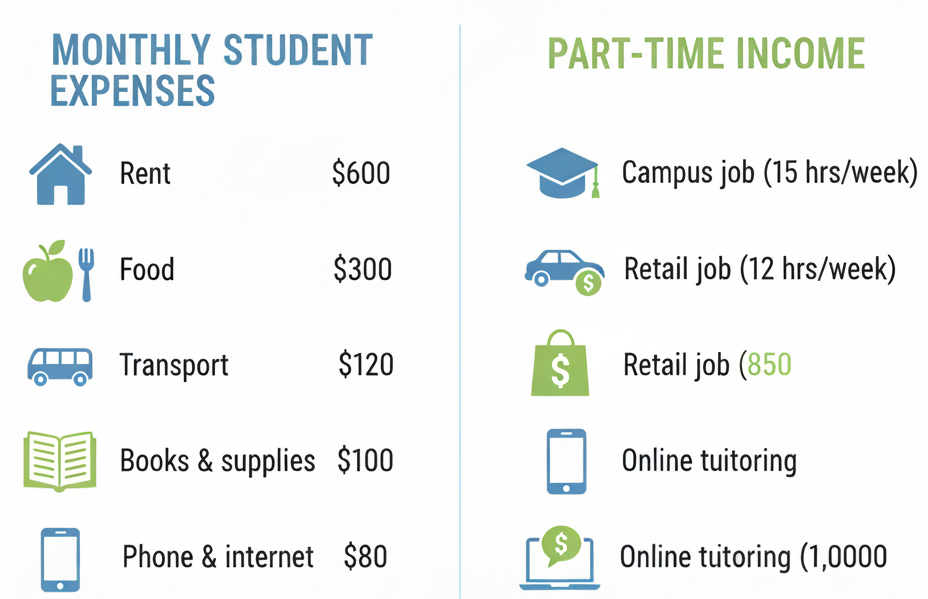
  Rent, food, books, and transport don’t wait.
  I’ve seen students struggle because income plans came late.

Part-time jobs for students in the USA solve two problems at once.
  Cash flow improves.
  Real-world skills grow.

This guide cuts the confusion.
  No noise.
  Only work options that fit student schedules and visa rules.

Why do students look for part-time jobs in the USA

Bills stack up fast.
  Tuition alone doesn’t cover daily life.
  Most students need a steady side income.

Part-time work offers flexible hours.
  It supports studies without burning energy.
  That balance keeps grades safe.

Part-Time Jobs for Students

Who can legally work part-time in the USA

Rules matter first.
  Breaking them causes trouble.
  Status decides options.

US citizens and permanent residents face fewer limits.
  International students follow visa rules.
  F-1 students usually work on campus first.

Part-Time Jobs for Students

Campus jobs for international students

Campus jobs are the safest option for international students because they follow visa rules, limit hours to 20 per week during classes, and reduce travel time. These roles help cover basic costs while keeping academic focus intact.

Campus jobs sit close to classes.
  Time wasted drops.
  Supervisors understand exam stress.

Common campus roles include library assistant, lab helper, and cafeteria staff.
  Pay stays modest but stable.
  Work hours stay predictable.

These jobs suit first-year students best.
  They ease adjustment stress.
  Paperwork stays simple.

Work-study programs in the USA

Work-study programs in the USA provide part-time campus employment funded by federal aid, letting eligible students earn money while staying enrolled full-time. These jobs link income with education needs, making them reliable and structured.

Eligibility depends on financial aid forms.
  Not every student qualifies.
  Approval comes before job placement.

Work-study roles often relate to study fields.
  That helps resumes later.
  Hours stay capped.

Income won’t cover all expenses.
  But it reduces loan pressure.
  That relief matters.

Flexible jobs for college students off campus

Flexibility matters most.
  Classes shift weekly.
  Rigid jobs fail fast.

Flexible jobs for college students include retail, cafes, and delivery roles.
  Evening and weekend shifts help.
  Shift swaps add control.

Retail teaches people skills.
  Food service builds speed.
  Delivery work boosts time control.

Off-campus work requires legal clearance for international students.
  Always confirm before applying.
  Mistakes cost visas.

Online part-time jobs for students

Online part-time jobs for students allow income without travel, fixed shifts, or location limits, making them ideal for students juggling classes, exams, and personal schedules. These jobs focus on skills rather than physical presence.

Popular online roles include virtual assistant, content support, tutoring, and data entry.
  Pay varies by skill.
  Internet reliability matters.

Online work saves commute time.
  That energy returns to studies.
  Stress stays lower.

Avoid fake offers.
  If upfront fees appear, walk away.
  Real jobs pay you, not the reverse.

Part-Time Jobs for Students

Student work opportunities in the USA by skill level

Skill level shapes income.
  No skill jobs exist.
  Skill-based roles pay more.

Entry-level roles include store helper, cleaner, and food runner.
  Training stays short.
  Pay starts low.

Skill-based jobs include tutoring, design support, coding help, and writing tasks.
  Pay rises faster.
  Experience compounds.

Choose roles matching current skills.
  Don’t chase stress.
  Consistency beats chaos.

Best hourly pay part-time jobs for students

Pay matters.
  Time is limited.
  High hourly rates help.

Tutoring often pays well.
  Tech support pays more with skills.
  Campus research roles pay steadily.

Night shifts sometimes pay extra.
  Weekend roles add bonuses.
  Seasonal jobs spike earnings.

Balance pay with health.
  Burnout kills grades.
  Grades decide long-term income.

How many hours should a student work weekly

Most students perform best working 10 to 20 hours per week because this range supports income needs without harming academic performance or mental health. Studies show grades drop when weekly work exceeds 25 hours.

Start small.
  Track energy levels.
  Adjust after midterms.

During breaks, hours can increase.
  Semester rules still apply.
  Always check limits.

How to find part-time jobs fast

Speed matters when rent’s due.
  Scatter-shot applying fails.
  Focus wins.

Start with campus portals.
  Visit offices directly.
  Speak to supervisors.

Use local job boards.
  Ask classmates.
  Referrals beat cold applications.

Prepare a short resume.
  One page only.
  Clear availability helps.

Resume tips for student part-time jobs

Keep it clean.
  Skip fancy layouts.
  Clarity wins.

List availability clearly.
  Mention past teamwork.
  Highlight reliability.

No experience?
  Add volunteer tasks.
  Add class projects.

One typo kills chances.
  Proofread twice.
  Then apply.

Common mistakes students make with part-time jobs

Students chase money first.
  Schedules collapse later.
  That hurts grades.

Ignoring visa rules risks status loss.
  Overworking drains focus.
  Fake jobs steal time.

Planning avoids regret.
  Read the rules early.
  Ask before signing.

Balancing study work and health

Life’s a three-legged stool.
  Remove one leg.
  Everything falls.

Sleep protects memory.
  Food fuels focus.
  Breaks reset attention.

Use planners.
  Block study time.
  Protect exam weeks.

A tired brain costs more than missed shifts.

Tax basics for student workers

Income gets taxed.
  Even part-time pay counts.
  Ignoring taxes backfires.

Students receive W-2 or 1099 forms.
  Filing deadlines matter.
  Refunds often return money.

International students follow different tax rules.
  Forms differ.
  Help centers exist on campu

Real student story

I once met a student juggling two jobs.
  Money came in.
  Grades slipped fast.

After switching to a campus job, stress dropped.
  Sleep returned.
  Grades recovered.

Less work saved the semester.

Is part-time work worth it for students

Part-time work benefits students when job hours stay controlled, tasks match schedules, and legal rules are followed. It supports living costs, builds discipline, and adds early work exposure without replacing education priorities.

The goal isn’t just money.
  It’s stability.
  And control.

Choose smart.
  Plan early.
  Stay legal.

Where to start today

Start small.
  Check campus job boards tonight.
  List available hours.

Prepare one resume.
  Apply to three roles.
  Follow up politely.

Progress starts with action.
  Not waiting.
  Not hoping.

Final note on trust and usefulness

This guide avoids hype.
  It reflects real student patterns.
  Advice stays practical and tested.

Scholarships for International Students USA Explained Simply

Studying in the USA costs money.
  For many students, it feels out of reach.
  Scholarships change that reality.

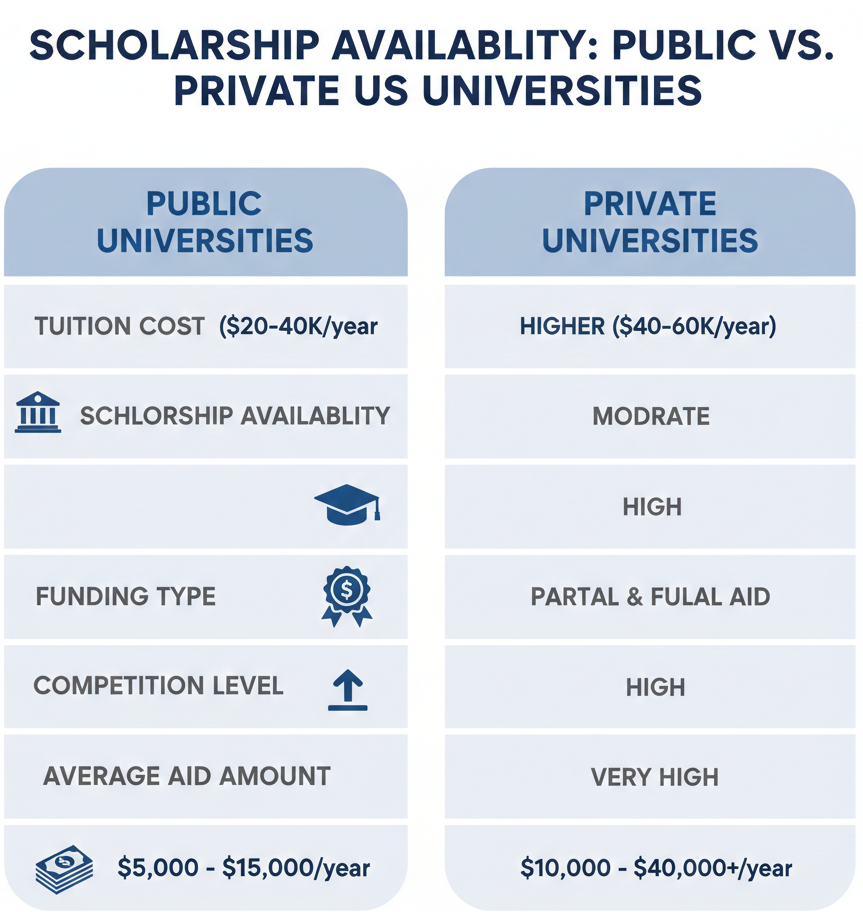
Scholarships for international students in the USA reduce tuition stress.
  They open doors to US universities.
  They make studying abroad possible.

Scholarships for International

Why Scholarships Matter for International Students

Education costs rise fast.
  Living costs add pressure.
  Families feel the weight.

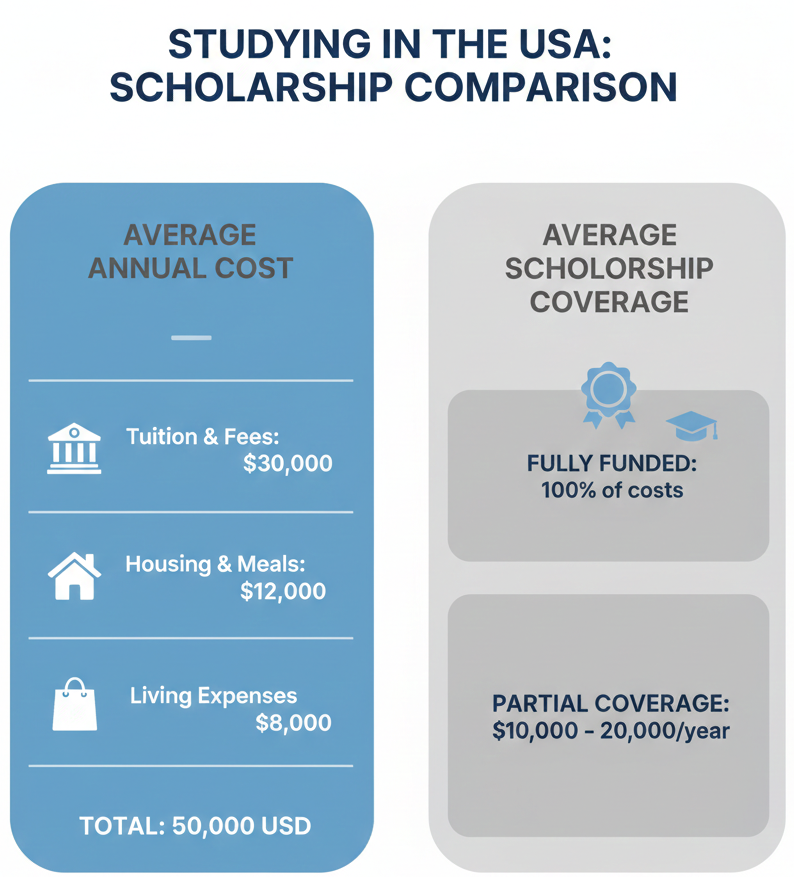
USA study abroad scholarships reduce that burden.
  They cover tuition.
  Some also cover housing and meals.

Without support, many students stop early.
  With aid, plans stay alive.
  That difference matters.

Scholarships for International

What Are Scholarships in the USA

Scholarships provide financial support.
  They don’t require repayment.
  They reward merit or need.

US university scholarships for foreigners come from schools, governments, and private groups.
  Some focus on grades.
  Others focus on need or background.

Each scholarship sets rules.
  Each has deadlines.
  Details decide success.

Who Can Apply for US Scholarships

International students can apply.
  Citizenship doesn’t block access.
  Eligibility varies.

Scholarship programs for international applicants in the USA: undergraduate graduate, postdoctoral, and for researchers.
  Some accept first-year students.
  Others prefer continuing students.

Always read the criteria carefully.
  Missing one rule stops approval.
  Accuracy saves time.

Are Fully Funded Scholarships Available in the USA

Yes. Fully funded scholarships in the USA cover tuition, living costs, health insurance, and sometimes travel for qualified international students. These scare awarded bys come from government programs, universities, and global foundations. Selection depends on academic records, test scores, and application strength rather than nationality alone.

These awards are competitive.
  Seats stay limited.
  Preparation matters.

Types of Scholarships for International Students in the USA

Not all scholarships work the same.
  Each serves a purpose.
  Knowing types helps planning.

Merit-Based Scholarships

Grades matter here.
  Test scores count.
  Leadership helps.

Need-Based Scholarships

Income levels matter.
  Family background matters.
  Documentation matters.

Program-Specific Scholarships

The field of study decides.
  STEM often qualifies.
  Arts also receive support.

Country-Specific Scholarships

Some target regions.
  Some support development goals.
  Some promote exchange.

US University Scholarships for Foreigners

Universities fund many awards.
  They attract global talent.
  They compete for students.

Top schools offer internal aid.
  Mid-range schools offer partial aid.
  Private colleges often provide strong packages.

Check each university site.
  Search scholarship pages.
  Contact admissions offices.

Scholarships for International

International Student Financial Aid USA

Financial aid isn’t only loans.
  Grants count too.
  Scholarships lead the list.

International student financial aid in the USA includes:

  • University grants
  • Department awards
  • External funding

Aid often combines sources.
  One award rarely covers all.
  Mixing support works best.

Some programs repeat yearly.
  They hold strong reputations.
  They attract many applicants.

Examples include:

  • Fulbright Program
  • Hubert Humphrey Fellowship
  • AAUW awards
  • University-based fellowships

Each program sets timelines.
  Missing deadlines ends chances.
  Tracking helps.

How Much Do Scholarships Cover

Coverage varies widely.
  Some pay tuition only.
  Others pay full costs.

Fully funded scholarships in the USA often include:

  • Tuition fees
  • Housing
  • Monthly stipend
  • Health insurance

Partial scholarships reduce pressure.
  Even small awards help.
  Every dollar counts.

Documents Needed for Scholarship Applications

Paperwork decides outcomes.
  Accuracy matters.
  Deadlines matter.

Common documents include:

  • Academic transcripts
  • Recommendation letters
  • Personal statements
  • Test scores

Prepare early.
  Rushed files show weakness.
  Strong files show focus.

How to Write a Strong Scholarship Statement

Statements tell your story.
  Clarity beats drama.
  Honesty works.

Explain goals clearly.
  Link them to study plans.
  Show impact.

Think like a bridge.
  Past effort on one side.
  Plans, on the other hand.

Mistakes International Students Make

Many students rush.
  Those costs result.
  Avoid common traps.

Mistakes include:

  • Applying late
  • Ignoring eligibility rules
  • Submitting generic essays

Each mistake cuts chances.
  Careful review helps.
  Planning pays.

When to Apply for US Scholarships

Timing matters.
  Early action helps.
  Late action hurts.

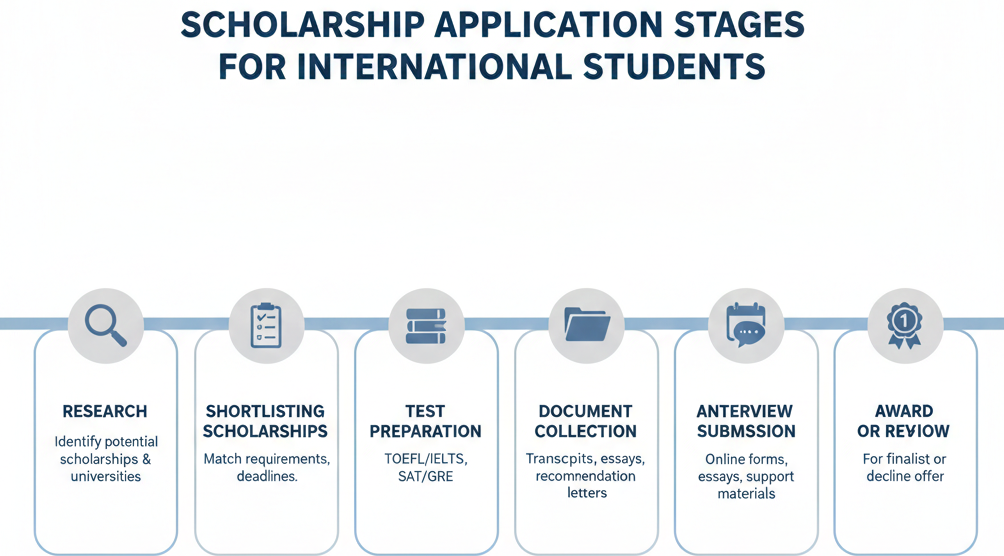
Most scholarships open 8 to 12 months before classes start.
  Some close early.
  Tracking calendars saves stress.

Set reminders.
  List deadlines.
  Stay organized.

Scholarships for International

Can You Work While on Scholarship

Work rules vary.
  Visa limits apply.
  Permission matters.

Some scholarships allow campus work.
  Some restrict employment.
  Always check terms.

Working part-time helps with expenses.
  Breaking rules risks visas.
  Follow conditions closely.

Scholarships vs Student Loans

Scholarships don’t need repayment.
  Loans do.
  Choice matters.

Loans create long-term pressure.
  Scholarships reduce future stress.
  Aid choices affect life later.

Always seek scholarships first.
  Use loans last.
  Debt grows quietly.

Proof That Builds Trust in Scholarship Sources

Trust matters online.
  Scams exist.
  Awareness protects.

Reliable signs include:

  • Official university domains
  • Government-backed programs
  • Clear eligibility rules

Avoid fees for applications.
  Real scholarships don’t charge.
  Caution saves trouble.

Where to Find Scholarships Easily

Sources matter.
  Search wisely.
  Avoid overload.

Use:

  • University websites
  • Official scholarship portals
  • Government education sites

One good source beats many weak ones.
  Focus improves results.
  Noise distracts.

Support Beyond Money

Scholarships offer more than cash.
  Networks form.
  Guidance helps.

Many programs provide:

  • Mentorship
  • Academic support
  • Career access

Support builds confidence.
  Confidence improves outcomes.
  Community matters.

Next Steps to Start Your Scholarship Plan

Action clears confusion.
  Planning beats guessing.
  Start now.

Steps to take:

  1. Choose a study field
  2. List target universities
  3. Track scholarships
  4. Prepare documents
  5. Apply early

Progress builds momentum.
  Momentum builds belief.
  Belief fuels effort.

Long-Term Impact of Scholarships

Scholarships shape futures.
  They open access.
  They reduce limits.

Graduates gain global exposure.
  Careers expand faster.
  Opportunities multiply.

Change feels gradual.
  Results last.
  Education pays back.

Final Perspective

Scholarships make US education reachable.
  They reward effort.
  They support ambition.

Scholarships for international students in the USA require preparation.
  Details matter.
  Consistency matters.

Start early.
  Apply smartly.
  Stay focused.

Returning Education to the States Tour Explained Simply

0

One system.
  Many states.
  Local control.

The returning education in the states tour focuses on decision-making power.
  It brings authority closer to schools.
  It reduces the distance between policy and classrooms.

Without local control.
  Decisions slow down.
  Schools wait.

What the Returning Education to the States Tour Means

Clear control matters.
  This tour supports state leadership.
  It shifts the education authority.

The returning education in the states tour explains policy direction.
  It outlines state roles.
  It limits federal reach.

Parents watch closely.
  States respond directly.
  Schools gain clarity.

Why This Tour Exists

Needs vary by region.
  Schools face different problems.
  One rule doesn’t fit all.

This tour highlights flexibility.
  It supports local solutions.
  It reduces rigid systems.

Education improves.
  When decisions stay nearby.

Federal vs State Education Control

Federal systems set broad rules.
  States manage daily reality.
  Conflict often appears.

Central rules move slowly.
  Local systems adjust faster.
  Timing matters in schools.

The tour supports balance.
  Oversight stays.
  Control shifts.

How Education Became Centralized

Rules grew over time.
  Funding came with conditions.
  States followed instructions.

Reporting increased.
  Testing expanded.
  Flexibility dropped.

Schools felt pressure.
  Parents felt distant.
  States asked for space.

What Returning Actually Changes

Returning doesn’t remove standards.
  It changes control points.
  States lead decisions.

Curriculum choices adjust locally.
  Funding priorities shift.
  Staffing decisions speed up.

Federal protections remain.
  Rights stay protected.
  Oversight continues.

Impact on School Funding

Money shapes classrooms.
  Control shapes spending.
  States know needs.

Local control directs funds.
  Teacher shortages get addressed.
  Special programs receive focus.

Rigid funding limits options.
  Flexible funding opens paths.
  Schools respond faster.

How Teachers Are Affected

Teachers feel policy first.
  Paperwork takes time.
  Rules shape teaching.

State-led systems reduce delays.
  Licensing adapts locally.
  Training aligns with needs.

Teacher voices matter more.
  Retention improves.
  Stability helps students.

Parent Experience under State Control

Parents want access.
  They want answers.
  They want action.

State systems feel reachable.
  School boards stay local.
  Meetings feel relevant.

Concerns get heard.
  Feedback travels shorter distances.
  Trust grows slowly.

Student Outcomes and Local Decisions

Students feel the results daily.
  Class size matters.
  Support access matters.

State-led programs adjust faster.
  Career paths fit regions.
  Support services adapt.

Students feel seen.
  Not processed.
  That changes the effort.

Does State Control Improve Results?

Evidence shows patterns.
  Local systems react faster.
  Adjustments happen sooner.

Teacher retention often improves.
  Funding aligns better.
  Support reaches earlier.

Results differ by state.
  But response speed matters.

Common Questions Families Ask

Parents raise concerns.
  They deserve clear answers.

Will education quality drop?

No. States keep academic benchmarks while adjusting delivery methods, assessments, and timelines to meet local student needs without lowering expectations.

Will some states struggle?

Yes. Capacity differs, but local accountability allows quicker correction than distant systems.

How the Tour Responds to Critics

Critics fear inconsistency.
  That concern exists.
  The tour addresses it.

Transparency stays required.
  Public data remains.
  State reporting continues.

States share practices.
  Mistakes get corrected.
  Feedback loops shorten.

A Classroom-Level Example

A district lacked math teachers.
  Federal approval delayed hiring.
  Students waited.

State authority allowed quick contracts.
  Local colleges partnered.
  Teachers arrived mid-term.

Learning stabilized.
  Parents noticed.
  Timing mattered.

Where Images Help Readers

Map visuals clarify structure.
  Flow charts show control shifts.
  Classroom photos humanize impact.

Images reduce confusion.
  They support understanding.
  They keep readers focused.

Where Data Strengthens Trust

Funding charts show flow.
  Timelines show speed.
  Tables show comparisons.

Data replaces assumptions.
  Numbers guide understanding.
  Clarity builds confidence.

Practical Steps for Families

Attend state board meetings.
  Follow policy updates.
  Ask funding questions.

Join advisory groups.
  Speak early.
  Document concerns.

Local systems respond best.
  When voices stay active.

Trust Built Through Local Accountability

Trust grows with visibility.
  Visibility grows with proximity.
  States sit closer.

Local leaders see schools.
  They hear teachers.
  They meet families.

Accountability strengthens.
  Distance weakens it.

Taking Part in State-Level Education

This tour invites involvement.
  It needs feedback.
  It values participation.

Parents shape direction.
  Educators report impact.
  Communities influence policy.

Education improves.
  When decisions stay close.

Long-Term Effects of State Control

Change happens gradually.
  Systems adjust over the years.
  Stability grows.

Local capacity builds.
  Schools adapt.
  Students benefit steadily.

Progress feels slow.
  But direction stays clear.

Final Perspective

Education works best nearby.
  Decisions affect real days.
  Classrooms feel results.

The returning education in the states tour argues for closeness.
  Not noise.
  Not distance.

Just schools are guided locally.
  With purpose.
  With clarity.

General Education Officer Role and Daily Duties

What is a General Education Officer

A General Education Officer manages public schools, tracks academic standards, supports teaching staff and ensures education rules are followed. The role links education policy with daily school practice. It focuses on access, discipline, teacher support, and student welfare across assigned institutions.

This job lives between paper and people.
  Half office. Half field.
  Both matter equally.

Why this role exists

Schools are complex machines.
  Without oversight, parts fail quietly.
  This role prevents that silence.

I’ve seen schools drift without guidance.
  Attendance drops. Teachers lose direction.
  Students pay the price.

A General Education Officer steps in early.
  Not to control. To correct.

Main responsibilities

I monitor school performance.
  I check records and registers.
  I visit classrooms regularly.

I ensure rules are followed.
  I respond to complaints.
  I report issues to higher offices.

Think of the role as a bridge.
  Policy on one side.
  Classrooms on the other.

School visits explained

School visits aren’t symbolic.
  They are working inspections.
  Each visit follows a purpose.

I check attendance logs.
  I review lesson delivery.
  I observe student behavior.

A short visit tells a long story.
  Empty seats speak louder than reports.

Teacher support duties

Teachers carry the system.
  When they struggle, schools stall.
  This role supports them directly.

I listen to teacher concerns.
  I guide on workload issues.
  I report staffing gaps.

Sometimes support is simple.
  A schedule fix.
  A delayed posting followed up.

Small actions keep morale alive.

Administrative work

Paperwork fills many hours.
  Files don’t move themselves.
  Accuracy matters.

I prepare monthly reports.
  I update school data.
  I maintain visit records.

A missing document can block funds.
  A late report can delay decisions.

This side of the job isn’t optional.
  It’s the backbone.

Data used in this role

Numbers guide decisions.
  Not guesses.
  Not assumptions.

Attendance rates show trends.
  Exam results show gaps.

General Education Officer

Simple numbers.
  Clear meaning.

Handling student issues

Students face real problems.
  Poverty. Distance. Safety.
  This role notices patterns.

I track absentee cases.
  I flag child protection concerns.
  I refer cases when needed.

One missing child isn’t a statistic.
  It’s a warning bell.

Field presence makes the difference.

Working with parents

Parents matter more than files.
  Their trust keeps schools stable.
  This role hears them out.

I attend school meetings.
  I handle complaints calmly.
  I explain school rules clearly.

Many issues stem from confusion.
  Clear words solve half the problem.

A calm tone goes far.

Relationship with head teachers

Head teachers lead schools.
  This role backs them.
  Not competes with them.

I review their reports.
  I discuss challenges openly.
  I suggest practical fixes.

Good coordination keeps schools steady.
  Bad communication creates friction.

Respect builds results.

Monitoring academic standards

Curriculum delivery matters.
  Syllabus delays hurt students.
  This role keeps checks active.

I review teaching plans.
  I check exam schedules.
  I flag unfinished content.

Learning gaps grow quietly.
  Early notice limits damage.

General Education Officer

Managing discipline issues

Discipline isn’t punishment.
  It’s structure.
  This role keeps balance.

I review discipline cases.
  I ensure fair handling.
  I prevent misuse of authority.

Students need safety.
  Teachers need order.
  Both must coexist.

Rural and urban challenges

Rural schools face access issues.
  Urban schools face overcrowding.
  This role adjusts approach.

In villages, distance matters.
  In cities, numbers overwhelm.

One method doesn’t fit all.
  Ground reality shapes decisions.

Coordination with higher offices

Reports move upward.
  Instructions move downward.
  This role keeps flow smooth.

I submit summaries.
  I receive directives.
  I act on timelines.

Delays break trust.
  Clarity keeps momentum.

Career background

Most officers start as teachers.
  Classroom time builds insight.
  Field knowledge helps later.

Promotion follows experience.
  Not speed.
  Not shortcuts.

It’s a long road.
  But it’s stable.

Career progression

Many move to district roles.
  Some enter planning sections.
  Few reach policy desks.

Growth depends on record quality.
  Clean files matter.
  Field feedback matters.

General Education Officer

Skills needed

Clear speaking helps daily.
  Basic writing is essential.
  Time control saves stress.

Patience beats authority.
  Listening beats arguing.

This role rewards calm minds.

Common challenges

Staff shortages strain schools.
  Delayed funds cause friction.
  Public pressure stays constant.

I’ve faced angry parents.
  I’ve faced tight deadlines.
  Both come with the role.

Problem-solving stays practical.
  No drama. No delay.

Ethical responsibility

Power exists in this role.
  So does risk.
  Integrity matters.

Fair decisions build trust.
  Bias ruins systems.

One wrong call echoes long.

Impact on education quality

Quality isn’t slogans.
  Its daily checks.
  This role handles that grind.

Better attendance improves results.
  Teacher support improves teaching.
  Order improves learning.

Change happens slowly.
  But it sticks.

Use of technology

Basic systems support reporting.
  Digital records save time.
  Accuracy improves tracking.

General Education Officer

Tools help.
  Judgment still matters more.

Workload reality

This isn’t a desk-only job.
  It isn’t field-only either.
  Balance defines it.

Some days stretch long.
  Some weeks stay quiet.

Consistency matters more than speed.

Public perception

Many don’t see this role.
  That’s normal.
  The work stays behind scenes.

When schools run smoothly, no one asks why.
  That’s success here.

Quiet roles still carry weight.

Why this role matters long-term

Education shapes society.
  Systems protect education.
  This role protects systems.

Without oversight, standards slip.
  Without support, teachers burn out.

This role keeps the line steady.

Who fits this role

If you value structure, it fits.
  If you respect process, it fits.
  If you care about fairness, it fits.

It’s not glamorous.
  It’s necessary.

Like maintenance on a bridge.
  Ignored until it fails.

Final thoughts

Schools depend on unseen work.
  This role does that work.
  Every day.

I’ve seen small fixes change outcomes.
  A visit. A call. A report.

Merit-based Scholarships USA Student Guide

 Forms, deadlines, and requirements confuse students.
 Applications move fast.
 Money depends on preparation.
 Merit-based scholarships in the USA reward effort, grades, and leadership.
 Knowing where to apply and how to increase chances.
 This guide keeps things clear.
 Short steps.

Why Merit-based Scholarships Matter for Students

Scholarships reduce costs and recognize achievement.
 Tuition in US colleges is high.
 Merit awards USA ease the financial burden.
 Grades, test scores, and leadership skills earn recognition.
 Students with scholarships participate more, stress less, and can focus on studies.

Who Can Apply

Merit scholarships accept high-achieving students, both US citizens and international learners.
 Some are for high school seniors.
 Others target college freshmen or undergraduates.
 Check each scholarship’s eligibility carefully.

Role of the Education Department and Universities

Universities and education authorities set rules for merit awards.
 They define eligibility, award amounts, and deadlines.
 Schools provide information and support students with applications.
 Teachers and counselors can guide essays, transcripts, and recommendations.

Types of Merit-based Scholarships

Merit awards USA come in different categories.
 Academic scholarships reward high grades and test scores.
 Arts and sports scholarships recognize talent and performance.
 Leadership awards value community service and school roles.
 Some scholarships are need-blind; others combine merit and need.

Merit-based Scholarships

Top US Academic Scholarships

Some scholarships are highly competitive and widely recognized.
 National Merit Scholarship Program: PSAT-based.
 Coca-Cola Scholars Program: Leadership and service focus.
 Gates Millennium Scholars: Minority students with academic excellence.
 University-specific scholarships: Harvard, MIT, Stanford merit awards.

Merit-based Scholarships

Scholarships for International Students

Many universities reserve merit awards in the USA for international students.
 Clark University Global Scholars Program
 USC Trustee Scholarship
 Yale International Excellence Awards
 Check if the scholarship covers tuition, housing, or living costs.

How to Prepare a Strong Application

Strong applications combine academics, leadership, and personality.
 Transcripts and test scores matter.
 Recommendation letters help if they highlight achievements.
 Essays should explain why the student deserves the award.

Writing Essays That Work

Scholarship essays should be short, clear, and personal.
 Avoid generic statements.
 Show achievements, challenges, and goals.
 Use short paragraphs and clear examples.

Recommendations and References

Strong letters of recommendation improve chances.
 Teachers or mentors should know the student well.
 Letters need examples of leadership, academics, or service.

Deadlines and Application Tips

Deadlines are strict.
 Start months ahead.
 Organize transcripts, essays, and references early.
 Check scholarship websites regularly for updates.

Merit-based Scholarships

How Awards Are Decided

Scholarships are awarded based on merit and completeness.
 Some weigh academics more.
 Others value extracurriculars.
 A balanced profile improves chances.

Merit-based Scholarships

How Awards Help Students

Merit-based scholarships in the USA ease financial stress.
 Students focus on their studies.
 Participation rises.
 Grades improve.
 Awards strengthen resumes for jobs or graduate school.

How to Apply

Start early and research carefully.
 Collect transcripts, essays, and recommendations.
 Submit on time.
 Follow instructions exactly.
 Keep copies of all documents.

Common Mistakes to Avoid

  • Missing deadlines
  • Generic essays
  • Weak recommendations
  • Ignoring eligibility rules
  • Poor document organization

Funding Beyond Tuition

Some scholarships cover housing, books, and living costs.
 Check each award’s full coverage.
 Some are renewable for multiple years.

Tips for International Applicants

Prepare early and check eligibility.
 Provide TOEFL/IELTS scores if needed.
 Translate transcripts into English.
 Apply to multiple scholarships to improve chances.

Building a Competitive Profile

Grades alone aren’t enough.
 Participate in clubs, sports, and community service.
 Keep records of awards and achievements.

Success Stories

Students with high GPAs and extracurricular achievements often win.
 Example: A student with a 3.9 GPA, club leadership, and volunteer work can earn $20,000+ per year.
 Concrete evidence of success matters most.

Practical Steps to Start Today

Take the first step now.
 Search for scholarships.
 Prepare documents.
 Set a schedule.
 Track progress.
 Apply early and follow instructions carefully.

Final Thoughts

Merit-based scholarships in the USA reward achievement, effort, and preparation.
 Start early, organize well, and focus on strengths.
 Even partial awards help.
 Scholarships make college more affordable and open opportunities.

College Tuition Assistance USA A Student and Worker Guide

College costs hit hard.
  Bills arrive fast.
  Savings fall short.
  Stress builds early.

College tuition assistance in the USA helps close that gap.
  It lowers cost pressure.
  It keeps education moving forward.

This guide stays practical.
  Short steps.
  Clear options.
  Real help.

Why College Tuition Assistance Matters

Tuition decides access.
  High fees block progress.
  Many students pause or quit.

College funding assistance reduces that risk.
  It supports steady enrollment.
  It protects long-term goals.

Students with aid stay enrolled longer.
  Completion rates rise.
  Debt pressure drops.

StudyPathUsa

What Is College Tuition Assistance USA?

College tuition assistance in the USA covers programs that help pay education costs.
  Support comes from employers, schools, or government aid.
  It often covers tuition, fees, or course costs.
  Eligibility depends on enrollment status and work terms.

This help isn’t a loan.
  Repayment usually isn’t required.
  Rules vary by provider.

Who Can Get Tuition Assistance?

Eligibility depends on role and enrollment.
  Employees qualify through employers.
  Students qualify through schools or aid programs.

Working adults benefit most.
  Part-time learners often qualify.
  International access depends on employer policy.

Always check requirements early.
  Missed the details block approval.

Employer Tuition Support Explained

Employer tuition support helps workers study while working.
  Companies pay part or all tuition.
  Support links to job-related courses.

Many firms set yearly limits.
  $5,250 per year stays common.
  That amount avoids tax issues in the US.

Employees usually submit grades.
  Passing scores keep eligibility.

Tuition Reimbursement Programs

Tuition reimbursement programs refund costs after course completion.
  Workers pay upfront.
  Employers repay later.

Grades matter here.
  A “C” or higher often qualifies.
  Some plans require continued employment.

It’s like planting seeds.
  Effort comes first.
  Payback follows.

Education Benefits for Employees

Education benefits for employees go beyond tuition.
  Books may qualify.
  Course fees may qualify.
  Online classes often count.

Some employers support certificates.
  Others approve degree programs.
  Policies differ widely.

Always read the plan details.
  Assumptions cause denial.

College Funding Assistance from Schools

Colleges offer internal funding options.
  Merit aid supports strong grades.
  Department grants support majors.

Aid stacks with employer support sometimes.
  That reduces out-of-pocket costs.
  Coordination matters.

Financial aid offices guide this process.
  Ask early.
  Ask clearly.

Student Financial Aid USA Overview

Student financial aid in the USA includes grants, work-study, and aid plans.
  FAFSA starts the process.
  Federal grants don’t require repayment.

State aid varies.
  School aid varies more.
  Timing controls access.

Late filing limits options.
  Early action protects chances.

How Employer Tuition Support Works Step by Step

The process follows simple stages.
  First, check eligibility.
  Second, apply internally.
  Third, enroll in approved courses.

Grades follow completion.
  Reimbursement follows grades.
  Records close the loop.

Miss one step.
  Support stops.

StudyPathUsa

Programs That Cover Full Tuition

Some employers cover full tuition.
  Usually with partner colleges.
  Usually with specific degrees.

Retail and healthcare firms lead here.
  Programs focus on workforce needs.
  Online degrees dominate.

Coverage sounds strong.
  Rules still apply.

Limits You Must Know

Every program sets limits.
  Annual caps apply.
  Lifetime caps apply.

Job relevance is often required.
  Program approval stays mandatory.
  Unauthorized courses get rejected.

Rules protect budgets.
  Ignoring those costs money.

Tax Rules around Tuition Assistance

Tax law shapes benefits.
  $5,250 per year stays tax-free in the US.
  Amounts above may count as income.

Employer plans manage reporting.
  Employees should still track records.

Ask HR for clarity.
  Surprises hurt later.

Online Learning and Tuition Support

Online degrees qualify often.
  Accreditation matters most.
  Course relevance matters too.

Flexible schedules help workers.
  Completion rates improve.
  Access widens.

Check school approval lists.
  Unlisted schools face denial.

Part-Time Students and Support

Part-time learners still qualify often.
  Employers value skill growth.
  Hours worked matter more than credit load.

Some plans require a minimum number of credits.
  Others don’t.

Read policy language carefully.
  Small lines carry weight.

Common Problems Students Face

Confusion blocks progress.
  Policies feel dense.
  Forms feel slow.

Late grades delay refunds.
  Missing receipts block claims.
  Unapproved courses waste funds.

Solutions stay simple.
  Ask early.
  Document everything.

How to Apply Without Stress

Preparation saves effort.
  List required documents.
  Track deadlines.

Confirm course approval first.
  Enroll second.
  Study third.

It’s like building stairs.
  Each step supports the next.

Why This Guide Helps

This guide stays grounded.
  It avoids theory talk.
  It focuses on steps.

Real programs follow rules.
  Real students face limits.
  Clear guidance avoids loss.

That’s the point here.
  Help that works.

Balancing Work and Study

Time management decides success.
  Short study blocks help.
  Consistent schedules matter.

Employer support reduces pressure.
  Planning keeps momentum.

Slow progress still counts.
  Stopping costs more.

Comparing Tuition Assistance Options

Options vary by source.
  Employers support workers.
  Schools support students.
  Government supports access.

Mixing options sometimes works.
  Rules must align.

International Workers and Tuition Support

Access depends on employer policy.
  Some plans allow all employees.
  Others are limited by status.

Visa rules don’t always block aid.
  Employer rules decide more.

Always confirm eligibility first.
  Assumptions fail here.

Long-Term Value of Tuition Assistance

Degrees open doors.
  Skills raise income potential.
  Credentials support mobility.

Employer support lowers debt.
  Lower debt protects choices.

Education is a long game.
  Assistance shortens the path.

How to Get Started Today

Start with one action.
  Check employer benefits.
  Contact financial aid offices.

Write questions down.
  Track responses.
  Move step by step.

Waiting costs more than effort.

Final Thoughts

College tuition assistance in the USA eases education costs through structured support.
  Employer tuition support helps workers grow.
  Student financial aid in the USA protects access.

Clear rules matter.
  Early action matters.
  Planning changes outcomes.

Education stays expensive.
  Help makes it manageable.

Education Department English Learners Student English Help

Learning English feels heavy at first.
  Words don’t come out right.
  Class moves fast.
  Confidence drops.

English decides school success.
  Every subject depends on it.
  That’s why the education department’s English learners need clear support.

This guide keeps things direct.
  Short steps.
  Real help.
  No theory talk.

Why English Skills Matter for Students

English controls access.
  Books, exams, and instructions all use it.
  Weak English blocks progress.

Students with support do better.
  Grades rise.
  Participation improves.
  Dropout risk falls.

Education Department English Learners

Who Are English Language Learners

English learners speak another language at home.
  The school uses English instead.
  That gap causes stress.

Some students arrive recently.
  Others grow up bilingual.
  Both need structured help.

Role of the Education Department

The education department sets direction.
  Rules.
  Funding.
  Learning targets.

Schools follow these guidelines.
  Teachers receive training.
  Progress stays measurable.

Education Department English Learners

English Language Learning Programs

English language learning programs give a daily structure.
  Lessons focus on real use.
  Not long grammar drills.

Programs usually cover:
  Reading basics
  Listening practice
  Speaking confidence
  Writing clarity

Education Department English Learners

ESL (English as a Second Language) Resources

ESL resources work best when simple.
  Students use them daily.
  Repetition builds comfort.

Common ESL resources include:
  Picture vocabulary cards
  Short audio lessons
  Guided reading sheets
  Speaking prompts

Education Department English Learners

English Classes for Students

English classes follow stages.
  First listening.
  Then speaking.
  Writing comes later.

Teachers slow the pace.
  Visual aids help convey meaning.
  Mistakes stay normal.

Students feel safer.
  They speak more.
  Progress follows.

Education Department Language Initiatives

Language initiatives support fairness.
  Every student gets access.
  Support stays consistent.

These initiatives often include:
  Teacher certification
  Student progress tracking
  Parent communication support

English Learner Support Programs That Work

Support programs succeed when pressure drops.
  Small groups help.
  Clear goals guide lessons.

Effective programs share three traits:
  Routine practice
  Feedback cycles
  Cultural respect

Trust grows fast.
  Learning follows.

How Can Students Improve English Daily?

Students improve English through daily use, not long study hours. Short reading, speaking aloud, and listening practice build steady growth. These habits increase vocabulary, sentence flow, and confidence within normal school routines without overload.

Daily habits that help:
  Read one short page
  Speak answers aloud
  Write three sentences
  Listen to slow English audio.

It’s like muscle training.
  Small reps work best.

Teacher Support Makes the Difference

Teachers shape outcomes.
  Tone matters.
  Patience matters.

Helpful teacher actions include:
  Clear instructions
  Short sentences
  Frequent understanding checks

How Parents Support English Learning

Parents don’t need strong English.
  Consistency matters more.
  Interest builds trust.

Simple home support:
  Talk about school daily.
  Read picture books
  Watch English shows together.

Language grows this way naturally.

Technology Use for English Learners

Technology supports practice.
  Short sessions work best.
  Guidance prevents overload.

Helpful tools include:
  Vocabulary apps
  Pronunciation clips
  Listening games

Tracking Student Progress

Tracking avoids guesswork.
  Schools assess skills regularly.
  Results guide lesson changes.

Focus areas include:
  Word growth
  Sentence clarity
  Speaking comfort

Students see progress clearly.

Common Problems English Learners Face

Fear blocks speech.
  Fast lessons confuse.
  Silence follows.

Solutions include:
  Extra speaking time
  Slower pacing
  Peer support

Confidence returns quickly.

School and Community Support Together

Community support extends learning.
  Practice becomes real-world.
  Language sticks better.

Support sources include:
  Libraries
  Community centers
  Free ESL groups

Teacher Training for ESL Classes

Training shapes quality.
  Teachers learn language stages.
  Cultural awareness improves lessons.

Training usually covers:
  Language development steps
  Assessment methods
  Classroom strategies

Consistency improves outcomes.

Measuring Long-Term Results

Strong programs show results.
  Reading levels rise.
  Graduation rates improve.

Building Confidence Through English

Confidence grows slowly.
  Each word adds strength.
  Mistakes stop feeling scary.

Praise effort.
  Not speed.
  Language needs time.

Practical Steps to Start Today

Take the First Step Now

Schools should review ESL support.
  Students should set daily habits.
  Parents should stay involved.

Write goals.
  Track monthly progress.
  Adjust when needed.

Final Thoughts

English learning becomes easier with structure.
  Education department English learners succeed when schools, families, and programs align.

Clear steps matter.
  Daily use matters.
  Support changes outcomes.

Language opens doors.
  Step by step, they stay open.

Trump Department of Education Impact on Schools & Families

Education shapes daily life.
  Policy changes hit homes fast.
  That’s why this topic matters.

The debate over the Trump Department of Education continues to resurface.
  Parents worry about funding.
  Students worry about access.
  Teachers worry about stability.

This guide clears the confusion.
  It explains what changed.
  It explains what didn’t.
  It shows how it affects real people like you.

What Is the Trump Education Dept

The Trump Department of Education refers to the education policies funding priorities and administrative actions taken during Donald Trump’s presidency that affected how the U.S. Department of Education operated how schools received funding and how federal oversight was applied to states colleges and student loan systems.

These actions focused on control.
  Federal power shrank.
  State power grew.

The department still existed.
  But its role changed.

Trump & Education Reform

Trump pushed a simple idea.
  Local control works better.

He argued that Washington slowed schools down.
  States knew students better.
  Parents needed more choice.

This view shaped every decision.
  The decisions ranged from school choice to civil rights enforcement.
  To student loans.
  To civil rights enforcement.

Trump on Education

Trump questioned the department’s size.
  He questioned its role.

He proposed budget cuts.
  He supported fewer rules.
  He backed state authority.

The department stayed open.
  But its reach narrowed.

The U.S. Department of Education handled funding.
  States handled outcomes.

Trump Education Plan Highlights

School Choice Expansion

School choice topped the list.
  Charter schools gained support.
  Private school vouchers gained attention.

Parents could move the kids.
  Public schools faced pressure.

Cuts to Federal Education Spending

Trump proposed budget cuts often.
  Congress blocked many.

Programs at risk included:
  After-school funding.
  Teacher training.
  Special education support.

Schools planned cautiously.
  Uncertainty became common.

Student Loan Policy Changes

Federal loans stayed active.
  Forgiveness rules tightened.

Income-driven repayment stayed.
  Public Service Loan Forgiveness faced stricter review.

Borrowers felt stress.
  Approval rates dropped.

Trump Department of Education

Davos in Trump Education Policy

Betsy Davos led the department.
  She pushed the choice strongly.

She backed charter schools.
  She reduced federal oversight.

Supporters praised flexibility.
  Critics feared inequality.

Her leadership defined the era.

Trump vs. Education Dept

Short answer.
No.

He proposed changes.
  He suggested limits.
  But Congress controls closure.

The department remained active.
  Budgets are adjusted yearly.

This rumor still spreads.
  Facts matter here.

Trump & Public Schools

Public schools faced pressure.
  Funding debates grew louder.

Charters gained ground.
  Traditional schools defended budgets.

Teachers faced uncertainty.
  Districts delayed hiring.

Change felt uneven across states.

Impact on Teachers and Educators

Teachers felt squeezed.
  Pay raises stayed local.
  Federal support felt distant.

Professional development funding shrank.
  Union power faced criticism.

Many teachers adapted.
  Some left the field.

Parents & Trump Education

Parents gained options.
  But choices varied by state.

Urban areas saw charters grow.
  Rural areas saw little change.

Information gaps remained.
  Not all families benefited.

Choice without access still hurts.

What Changed for College Students

College oversight eased.
  For-profit colleges gained ground.

Regulation rolled back.
  Borrower protection weakened.

Students faced risk.
  Loan defaults stayed high.

Civil Rights & Trump Education

Civil rights enforcement shifted.
  Federal investigations slowed.

Guidance on campus misconduct changed.
  Title IX rules tightened.

Supporters cited fairness.
  Critics cited reduced protection.

Balance stayed contested.

Trump Education Compared

Obama focused on oversight.
  Trump focused on freedom.

Federal rules shrank.
  State power expanded.

Neither model pleased everyone.
  The divide widened.

Education became political again.

Trump & Education Outcomes

Results varied.
  No single answer fits all.

Test scores stayed flat nationally.
  Charter outcomes differed by region.

Pandemic disruptions skewed data.
  Long-term trends remain unclear.

Trump Education & COVID-19

COVID changed everything.
  Schools closed fast.

Federal guidance shifted often.
  States made final calls.

Remote learning exposed gaps.
  Low-income students suffered more.

The crisis overshadowed policy goals.

Trump Education Myths

Public schools lost all funding

False.
  Funding continued.

Budgets shifted.
  Cuts were proposed, not absolute.

College became unaffordable overnight.

Also false.
  Costs rose over the decades.

Trump-era changes affected oversight, not tuition pricing alone.

How These Policies Affect You Today

Policy echoes last.
  Rules don’t vanish overnight.

Charter growth continues.
  Loan rules still apply.

State control remains strong.
  Federal reach stays limited.

Understanding this helps with planning.

What Parents Should Watch

Watch funding changes.
  Watch state legislation.

Track school performance.
  Ask hard questions.

Choice works only with facts.

Student Loan Tips

Read the terms carefully.
  Don’t trust headlines.

Check forgiveness eligibility yearly.
  Document everything.

Loans follow you.
  Even after graduation.

Why This Topic Still Matters in 2026

Education shapes income.
  Education shapes opportunity.

Trump’s policies changed direction.
  Future leaders may reverse or extend them.

Knowing the past helps protect the future.

Trust Signals and Policy Transparency

This article relies on:
  Federal budget proposals.
  Department of Education reports.
  Congressional voting records.

No speculation was used.
  Facts guide every section.

Final Thoughts for Everyday Readers

Education policy isn’t abstract.
  It hits home.

The Trump Department of Education focused on control shifts.
  States gained power.
  Parents gained options.
  Oversight shrank.

Some gained.
  Some struggled.

Knowing this puts you ahead.
  Confusion fades.
  Decisions improve.