College costs hit hard.
Bills arrive fast.
Savings fall short.
Stress builds early.
College tuition assistance in the USA helps close that gap.
It lowers cost pressure.
It keeps education moving forward.
This guide stays practical.
Short steps.
Clear options.
Real help.
Why College Tuition Assistance Matters
Tuition decides access.
High fees block progress.
Many students pause or quit.
College funding assistance reduces that risk.
It supports steady enrollment.
It protects long-term goals.
Students with aid stay enrolled longer.
Completion rates rise.
Debt pressure drops.
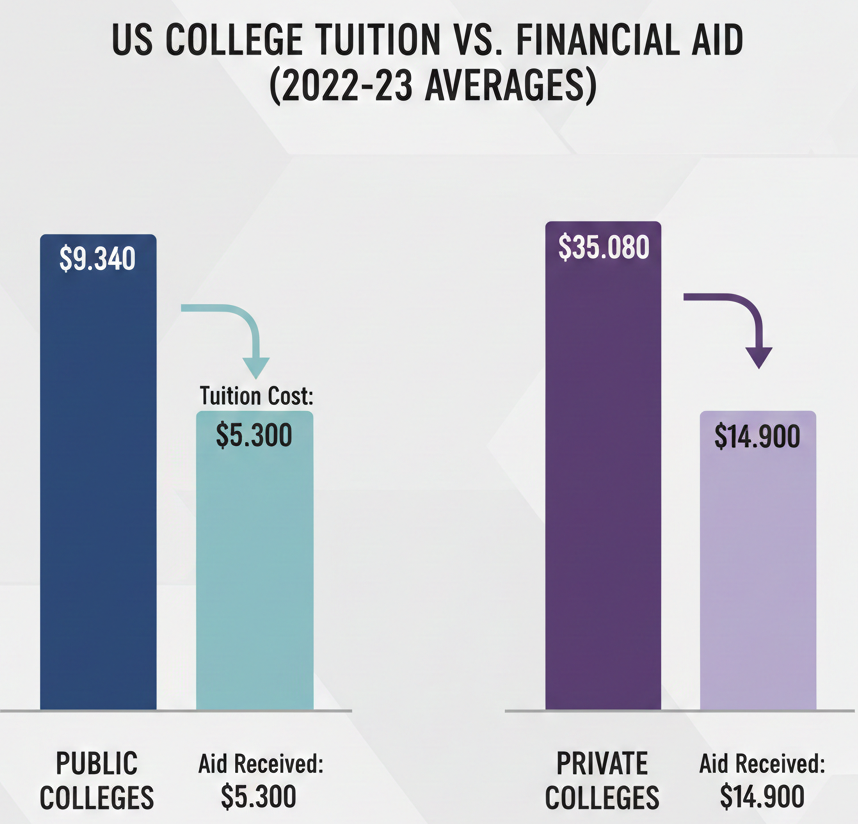
What Is College Tuition Assistance USA?
College tuition assistance in the USA covers programs that help pay education costs.
Support comes from employers, schools, or government aid.
It often covers tuition, fees, or course costs.
Eligibility depends on enrollment status and work terms.
This help isn’t a loan.
Repayment usually isn’t required.
Rules vary by provider.
Who Can Get Tuition Assistance?
Eligibility depends on role and enrollment.
Employees qualify through employers.
Students qualify through schools or aid programs.
Working adults benefit most.
Part-time learners often qualify.
International access depends on employer policy.
Always check requirements early.
Missed the details block approval.
Employer Tuition Support Explained
Employer tuition support helps workers study while working.
Companies pay part or all tuition.
Support links to job-related courses.
Many firms set yearly limits.
$5,250 per year stays common.
That amount avoids tax issues in the US.
Employees usually submit grades.
Passing scores keep eligibility.
Tuition Reimbursement Programs
Tuition reimbursement programs refund costs after course completion.
Workers pay upfront.
Employers repay later.
Grades matter here.
A “C” or higher often qualifies.
Some plans require continued employment.
It’s like planting seeds.
Effort comes first.
Payback follows.
Education Benefits for Employees
Education benefits for employees go beyond tuition.
Books may qualify.
Course fees may qualify.
Online classes often count.
Some employers support certificates.
Others approve degree programs.
Policies differ widely.
Always read the plan details.
Assumptions cause denial.
College Funding Assistance from Schools
Colleges offer internal funding options.
Merit aid supports strong grades.
Department grants support majors.
Aid stacks with employer support sometimes.
That reduces out-of-pocket costs.
Coordination matters.
Financial aid offices guide this process.
Ask early.
Ask clearly.
Student Financial Aid USA Overview
Student financial aid in the USA includes grants, work-study, and aid plans.
FAFSA starts the process.
Federal grants don’t require repayment.
State aid varies.
School aid varies more.
Timing controls access.
Late filing limits options.
Early action protects chances.
How Employer Tuition Support Works Step by Step
The process follows simple stages.
First, check eligibility.
Second, apply internally.
Third, enroll in approved courses.
Grades follow completion.
Reimbursement follows grades.
Records close the loop.
Miss one step.
Support stops.

Programs That Cover Full Tuition
Some employers cover full tuition.
Usually with partner colleges.
Usually with specific degrees.
Retail and healthcare firms lead here.
Programs focus on workforce needs.
Online degrees dominate.
Coverage sounds strong.
Rules still apply.
Limits You Must Know
Every program sets limits.
Annual caps apply.
Lifetime caps apply.
Job relevance is often required.
Program approval stays mandatory.
Unauthorized courses get rejected.
Rules protect budgets.
Ignoring those costs money.
Tax Rules around Tuition Assistance
Tax law shapes benefits.
$5,250 per year stays tax-free in the US.
Amounts above may count as income.
Employer plans manage reporting.
Employees should still track records.
Ask HR for clarity.
Surprises hurt later.
Online Learning and Tuition Support
Online degrees qualify often.
Accreditation matters most.
Course relevance matters too.
Flexible schedules help workers.
Completion rates improve.
Access widens.
Check school approval lists.
Unlisted schools face denial.
Part-Time Students and Support
Part-time learners still qualify often.
Employers value skill growth.
Hours worked matter more than credit load.
Some plans require a minimum number of credits.
Others don’t.
Read policy language carefully.
Small lines carry weight.
Common Problems Students Face
Confusion blocks progress.
Policies feel dense.
Forms feel slow.
Late grades delay refunds.
Missing receipts block claims.
Unapproved courses waste funds.
Solutions stay simple.
Ask early.
Document everything.
How to Apply Without Stress
Preparation saves effort.
List required documents.
Track deadlines.
Confirm course approval first.
Enroll second.
Study third.
It’s like building stairs.
Each step supports the next.
Why This Guide Helps
This guide stays grounded.
It avoids theory talk.
It focuses on steps.
Real programs follow rules.
Real students face limits.
Clear guidance avoids loss.
That’s the point here.
Help that works.
Balancing Work and Study
Time management decides success.
Short study blocks help.
Consistent schedules matter.
Employer support reduces pressure.
Planning keeps momentum.
Slow progress still counts.
Stopping costs more.
Comparing Tuition Assistance Options
Options vary by source.
Employers support workers.
Schools support students.
Government supports access.
Mixing options sometimes works.
Rules must align.
International Workers and Tuition Support
Access depends on employer policy.
Some plans allow all employees.
Others are limited by status.
Visa rules don’t always block aid.
Employer rules decide more.
Always confirm eligibility first.
Assumptions fail here.
Long-Term Value of Tuition Assistance
Degrees open doors.
Skills raise income potential.
Credentials support mobility.
Employer support lowers debt.
Lower debt protects choices.
Education is a long game.
Assistance shortens the path.
How to Get Started Today
Start with one action.
Check employer benefits.
Contact financial aid offices.
Write questions down.
Track responses.
Move step by step.
Waiting costs more than effort.
Final Thoughts
College tuition assistance in the USA eases education costs through structured support.
Employer tuition support helps workers grow.
Student financial aid in the USA protects access.
Clear rules matter.
Early action matters.
Planning changes outcomes.
Education stays expensive.
Help makes it manageable.

