Study Path Meaning
Education is one of the most important parts of life.
Every student wants to achieve success.
However, success does not happen by chance.
It requires planning, dedication, and the right direction.
This is where a study path becomes important.
An path is a planned route that helps a student reach educational goals.
It shows what to learn, when to learn it, and how to move forward.
A clear learning journey helps students stay focused.
It also reduces confusion and saves time.
In this guide, you will learn the meaning of a study, its benefits, key components, and how to create one for long-term success.
What Is a Study Path?
A study path is a structured plan for learning.
It outlines the subject courses, skills, and milestones a learner needs to complete.
The purpose is to help students move from their current level to their desired goal.
For example:
- A student wants to become a doctor.
- They must complete their school education.
- Then they enter medical college.
- After graduation, they continue professional training.
This sequence forms a learning journey.
Without a plan, students may waste time or choose the wrong direction.
A well-designed study plan keeps everything organized.

Why Is a Study Path Important?
Many students start studying without clear goals.
This often leads to frustration.
A study’ss path provides direction.
It acts like a roadmap for education.
Here are some important reasons why it matters.
1. Provides Clear Direction
Students know exactly what they need to learn.
They can focus on important tasks.
This reduces uncertainty.
2. Improves Time Management
A structured plan helps students use their time wisely.
They avoid unnecessary distractions.
3. Builds Motivation
When learners achieve small goals, they feel encouraged.
This motivation helps them continue learning.
4. Reduces Stress
Planning ahead minimizes confusion.
Students feel more confident about their future.
5. Supports Career Growth
Education and career goals become connected.
Students can prepare for future opportunities
Main Components of a Study Path
A successful learning plan includes several important elements.
Each component plays a role in achieving educational goals.
Learning Goals
Goals define what students want to achieve.
Examples include:
- Passing exams
- Learning a language
- Earning a degree
- Developing technical skills
Goals should be realistic and measurable.
Subjects and Topics
Students need to identify the subjects they must study.
Breaking subjects into smaller topics makes learning easier.
Learning Resources
Resources help students gain knowledge.
Examples include:
- Books
- Online courses
- Educational websites
- Video lessons
- Practice tests
Study Schedule
A timetable keeps learning organized.
Students should allocate time for each subject.
Progress Tracking
Monitoring progress helps learners stay on track.
Regular reviews show strengths and weaknesses.
Types of Study an Paths
Every learner has different goals.
As a result, there are different educational pathways.
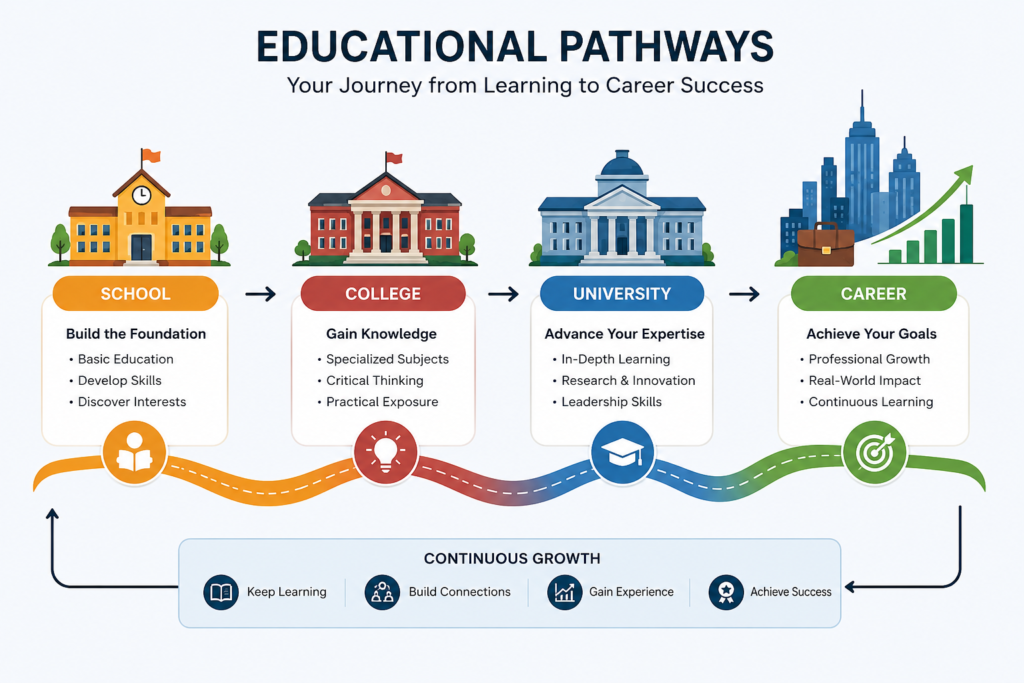
Academic Path
This path focuses on formal education.
It includes:
- School
- College
- University
Students follow a structured curriculum.
Professional Study Path
This pathway develops career skills.
Examples include:
- Teaching
- Engineering
- Medicine
- Information Technology
Professional certifications are often included.
Skill-Based Study Path
Some learners focus on practical skills.
Examples include:
- Graphic design
- Programming
- Digital marketing
- Content writing
These skills can lead directly to employment.
Personal Learning Path
People also learn for personal growth.
Examples include:
- Learning a new language
- Improving communication
- Reading history
Personal development creates lifelong learning habits.
How to Create an Effective Study
Creating a successful learning plan is easier than many people think.
Follow these simple steps.
1: Define Your Goal
Ask yourself:
“What do I want to achieve?”
Examples:
- Become a teacher
- Pass an exam
- Learn coding
- Improve English
Clear goals make planning easier.
2: Identify Requirements
Find out what knowledge and skills are needed.
Research educational requirements carefully.
3: Break Goals into Smaller Tasks
Large goals can seem overwhelming.
Divide them into manageable steps.
For example:
Learn English
- Vocabulary
- Grammar
- Reading
- Writing
- Speaking
Small tasks feel easier to complete.
4: Create a Schedule
Develop a realistic study routine.
Consistency is more important than studying for long hours.
5: Choose Quality Resources
Use reliable learning materials.
Avoid low-quality or outdated information.
6: Track Progress
Review achievements regularly.
Adjust your plan when necessary.
Common Mistakes Students Make
Many learners struggle because they make avoidable mistakes.
Understanding these mistakes can improve results.
Lack of Goals
Students often study without knowing why.
This reduces motivation.
Poor Time Management
Spending too much time on easy topics wastes valuable hours.
Ignoring Revision
Learning new information is important.
Reviewing old information is equally important.
Using Too Many Resources
Too many books and courses can create confusion.
Choose a few quality resources.
Unrealistic Expectations
Success takes time.
Expecting instant results can lead to disappointment.
Benefits of Following a Structured Learning Journey
A planned educational route offers many advantages.
Better Focus
Students know what to study.
This improves concentration.
Higher Productivity
Organized learning reduces wasted effort.
Stronger Confidence
Achieving milestones builds self-belief.
Improved Academic Performance
Students often achieve better grades.
Better Career Opportunities
Employers value individuals who continuously learn and improve.
Study Path for School Students
School students benefit greatly from planning.
A simple study plan may include:
Daily Goals
- Complete homework
- Review class notes
- Practice exercises
Weekly Goals
- Revise difficult topics
- Take practice tests
Monthly Goals
- Evaluate progress
- Improve weak areas
Consistency creates long-term success.
Study for College Students
College students face greater academic challenges.
A strong plan should include:
Course Planning
Understand all course requirements.
Skill Development
Learn practical skills related to your field.
Internship Preparation
Gain real-world experience.
Networking
Connect with professors and professionals.
These activities improve future career prospects.
Study Path for Online Learners
Online education is growing rapidly.
Many students now learn from home.
Online learners should:
- Set clear goals
- Create a study schedule
- Avoid distractions
- Take notes
- Practice regularly
Self-discipline is essential.

Technology and Modern Learning
Technology has transformed education.
Students now have access to:
- Online courses
- Educational apps
- Virtual classrooms
- Digital libraries
- AI learning tools
These resources make learning more flexible.
However, students should use technology wisely.
Balance screen time with active learning.
Tips for Staying Consistent
Consistency is often more important than intelligence.
Here are some useful tips.
Create a Routine
Study at the same time each day.
Remove Distractions
Keep your study area clean and quiet.
Take Short Breaks
Regular breaks improve concentration.
Celebrate Small Wins
Reward yourself after achieving goals.
Stay Positive
Learning is a journey.
Mistakes are part of growth.
The Future of Learning
Education continues to evolve.
Future learning will become more personalized.
Artificial intelligence and digital platforms will play larger roles.
Students who develop strong learning habits today will adapt more easily tomorrow.
Continuous education is becoming essential.
People must learn throughout their lives to remain competitive.
This makes a structured study more valuable than ever.
Conclusion
Understanding the meaning of a study is important for every learner.
A study path is a structured plan that guides students toward their educational goals.
It provides direction, improves time management, and increases motivation.
Whether you are a school student, college learner, or professional, having a clear learning roadmap can make a significant difference.
Success is not only about hard work.
It is also about following the right direction.
Create a plan, stay consistent, and track your progress.
With dedication and smart planning, you can achieve your academic and career goals more effectively.

