

Learning is a journey.
Every student wants success.
But success does not happen by chance.
It comes from planning focus and consistency.
A clear study path helps students move in the right direction.
It reduces confusion.
It saves time.
It improves learning results.
In this guide you will learn how to build an effective learning routine.
You will also discover practical tips to improve academic performance.
Introduction
Students often feel overwhelmed.
They have many subjects.
They face exams, assignments and deadlines.
Without a proper plan learning becomes difficult.
This is where a structured approach becomes important.
A clear learning direction helps students stay organized.
It increases confidence.
It also makes studying more enjoyable.
Whether you are in school, college, or university, a strong learning strategy can help you achieve your goals.
Why Having a Learning Plan Matters
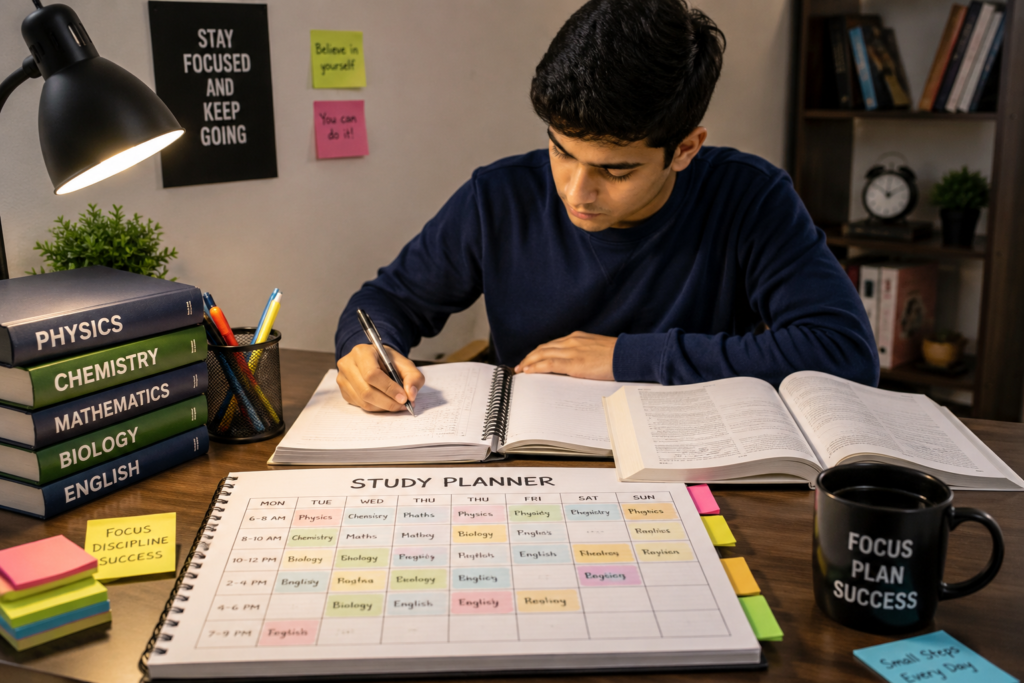
A learning plan provides direction.
It helps students know what to study.
It also helps them decide when to study.
Without a plan, students often waste time.
They may focus on less important tasks.
A proper plan offers many benefits.
Better Time Management
Students can divide their time wisely.
Each subject receives proper attention.
Important tasks are completed first.
Reduced Stress
Planning removes uncertainty.
Students feel more prepared.
They worry less about exams.
Improved Performance
Regular study habits improve understanding.
Students remember information more effectively.
Grades often improve as a result.
Increased Motivation
Small achievements create momentum.
Students feel encouraged to continue learning.
Setting Clear Academic Goals
Goals give purpose to learning.
Without goals, progress becomes difficult to measure.
Good goals should be realistic.
They should also be specific.
For example:
- Complete one chapter every week.
- Improve math grades by 10%.
- Read one educational book each month.
- Finish assignments before deadlines.
Clear goals help students stay focused.
They also make progress easier to track.
Understanding Your Learning Style
Every student learns differently.
Some learn best through reading.
Others prefer listening or watching.
Understanding your learning style can improve results.
Visual Learners
Visual learners enjoy:
- Charts
- Diagrams
- Videos
- Infographics
They remember information through images.
Auditory Learners
Auditory learners prefer:
- Lectures
- Discussions
- Audio lessons
They learn by listening.
Reading and Writing Learners
These learners enjoy:
- Notes
- Books
- Articles
- Written exercises
They absorb information through text.
Practical Learners
Practical learners prefer:
- Experiments
- Activities
- Real-life examples
They learn by doing.
Knowing your style helps you choose the best study methods.
Creating the Perfect Study Environment
Your environment affects concentration.
A good study space increases productivity.
Choose a quiet location.
Keep your desk clean.
Remove unnecessary distractions.
Important Tips
- Use proper lighting.
- Sit comfortably.
- Keep study materials nearby.
- Turn off unnecessary notifications.
- Maintain a tidy workspace.
A peaceful environment supports better focus.
Building a Daily Study Routine
Consistency is important.
Studying occasionally is not enough.
A daily routine creates strong habits.
Example Routine
Morning
- Review previous lessons.
- Read important concepts.
Afternoon
- Complete assignments.
- Practice exercises.
Evening
- Revise key points.
- Prepare for the next day.
A routine keeps learning organized.
It also reduces procrastination.
Time Management Strategies for Students
Time is valuable.
Using it wisely can improve academic success.
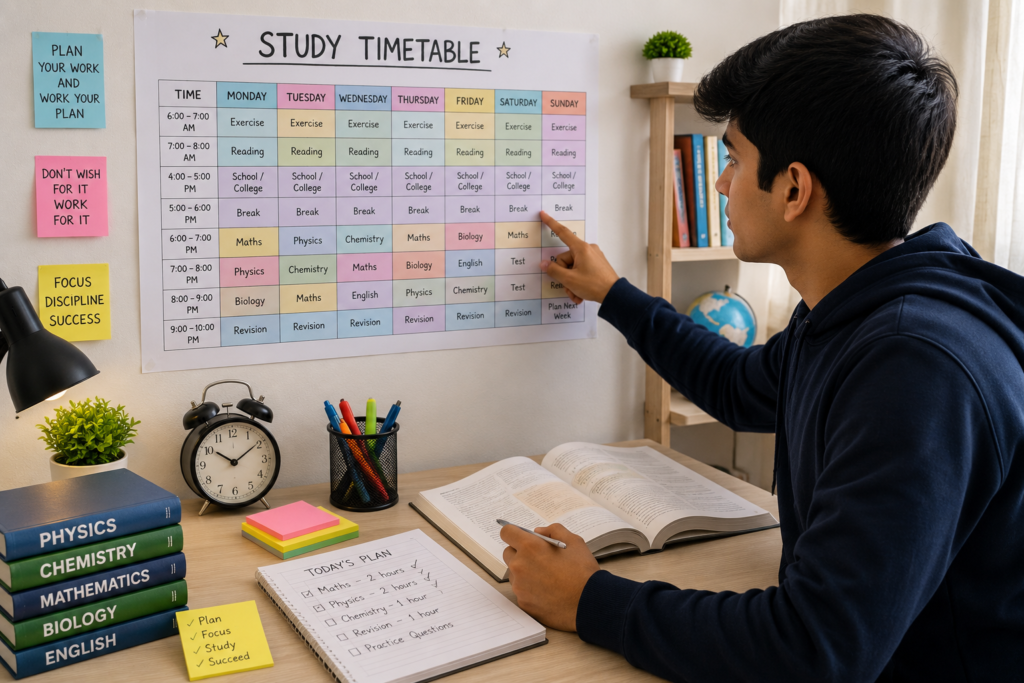
Create a Schedule
Plan your day.
Assign time to each subject.
Follow the schedule consistently.
Use Priority Lists
Complete important tasks first.
Focus on deadlines.
Avoid leaving work until the last minute.
Break Large Tasks Into Small Parts
Large projects can feel overwhelming.
Divide them into smaller tasks.
This makes work easier to manage.
Take Short Breaks
Continuous studying can reduce focus.
Take short breaks every hour.
Return with fresh energy.
Effective Note-Taking Techniques
They help students review information quickly.
Keep Notes Organized
Use headings and subheadings.
Separate topics clearly.
Highlight Key Information
Mark important points.
This helps during revision.
Use Simple Language
Write notes in your own words.
This improves understanding.
Review Notes Regularly
Do not wait until exams.
Frequent review improves memory.
The Importance of Reading Habits
Reading strengthens knowledge.
It improves vocabulary.
It also develops critical thinking skills.
Students should read regularly.
This includes:
- Textbooks
- Educational articles
- Research materials
- Informative books
Daily reading creates lifelong learning habits.
How to Improve Memory While Studying
Many students struggle to remember information.
Simple techniques can help.
Revision
Review information regularly.
Repetition strengthens memory.
Active Recall
Test yourself without looking at notes.
This improves retention.
Practice Questions
Answering questions helps reinforce learning.
Teaching Others
Explaining concepts improves understanding.
It also reveals knowledge gaps.
Avoiding Common Study Mistakes
Students often make mistakes that reduce effectiveness.
Recognizing them is important.
Studying Without a Plan
Random studying wastes time.
Always follow a schedule.
Ignoring Difficult Subjects
Many students avoid challenging topics.
Instead, spend extra time on them.
Multitasking
Studying while using social media reduces concentration.
Focus on one task at a time.
Last-Minute Preparation
Cramming increases stress.
Start preparing early.
Using Technology for Better Learning
Technology can support education.
Many tools help students learn efficiently.
Examples include:
- Educational websites
- Learning apps
- Online courses
- Digital flashcards
Technology should be used wisely.
Avoid unnecessary distractions.
Focus on educational resources.
Developing Self-Discipline
Discipline is essential for success.
Motivation changes frequently.
Discipline keeps students moving forward.
Set Clear Rules
Create daily study targets.
Follow them consistently.
Limit Distractions
Reduce social media use during study hours.
Stay Accountable
Track progress regularly.
Celebrate small achievements.
Self-discipline creates long-term success.

Exam Preparation Tips
Exams are an important part of education.
Preparation should begin early.
Create a Revision Plan
Allocate time for each subject.
Focus more on weaker areas.
Solve Practice Papers
Practice improves confidence.
It also identifies weaknesses.
Review Important Topics
Focus on key concepts.
Do not waste time on irrelevant information.
Get Enough Rest
Sleep improves concentration.
Avoid studying all night.
Building Confidence as a Student
Confidence improves academic performance.
Students should believe in their abilities.
Focus on Progress
Do not compare yourself to others.
Measure your own improvement.
Learn From Mistakes
Mistakes are part of learning.
Use them as opportunities for growth.
Stay Positive
Positive thinking improves motivation.
It also reduces stress.
The Role of Healthy Habits in Learning
Health affects academic success.
Students should take care of their bodies and minds.
Eat Nutritious Food
Healthy food supports brain function.
Stay Hydrated
Drink enough water daily.
Exercise Regularly
Physical activity improves concentration.
Get Enough Sleep
Rest is essential for learning and memory.
Healthy habits improve overall performance.
How Parents Can Support Students
Parents play an important role in education.
Their support can improve student outcomes.
Encourage Learning
Show interest in academic progress.
Provide a Quiet Study Space
A comfortable environment improves focus.
Motivate Without Pressure
Support students positively.
Avoid excessive stress.
Celebrate Achievements
Recognize effort and progress.
This builds confidence.
Creating Your Personal Study Path
Every student is unique.
There is no single method that works for everyone.
A personal study path should match your goals, strengths and learning style.
Start by identifying your objectives.
Create a realistic schedule.
Review progress regularly.
Adjust strategies when needed.
Consistency is the key.
Small daily efforts lead to big results.
Conclusion
Academic success requires planning.
It also requires dedication and patience.
Students who develop strong learning habits often achieve better results.
Set clear goals.
Manage your time wisely.
Maintain discipline.
Use effective study techniques.
Most importantly never stop learning.
A structured approach can transform your educational journey.
With the right mindset and consistent effort every student can reach their full potential.