Money pressure hits early.
Rent, food, books, and transport don’t wait.
I’ve seen students struggle because income plans came late.
Part-time jobs for students in the USA solve two problems at once.
Cash flow improves.
Real-world skills grow.
This guide cuts the confusion.
No noise.
Only work options that fit student schedules and visa rules.
Why do students look for part-time jobs in the USA
Bills stack up fast.
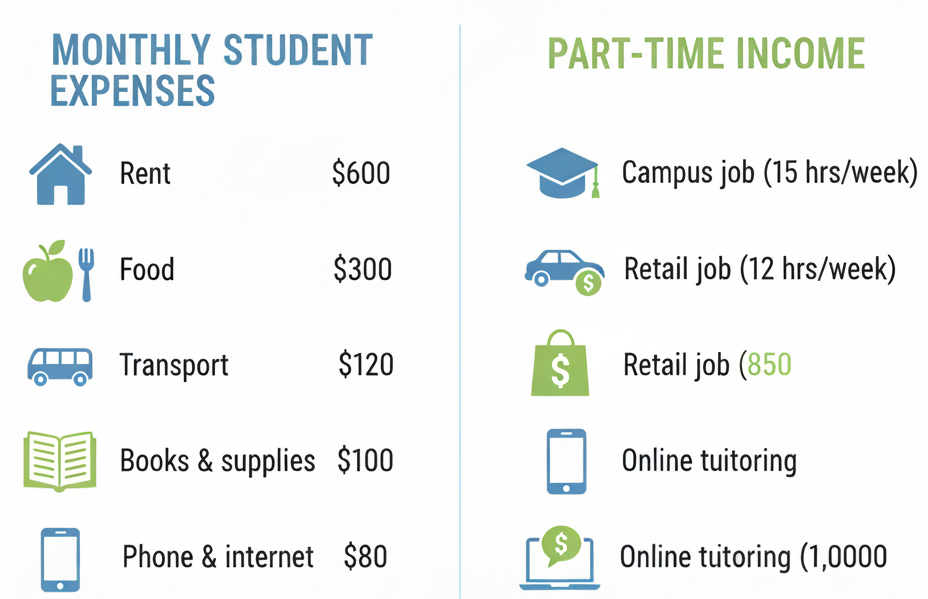
Tuition alone doesn’t cover daily life.
Most students need a steady side income.
Part-time work offers flexible hours.
It supports studies without burning energy.
That balance keeps grades safe.
Who can legally work part-time in the USA
Rules matter first.
Breaking them causes trouble.
Status decides options.
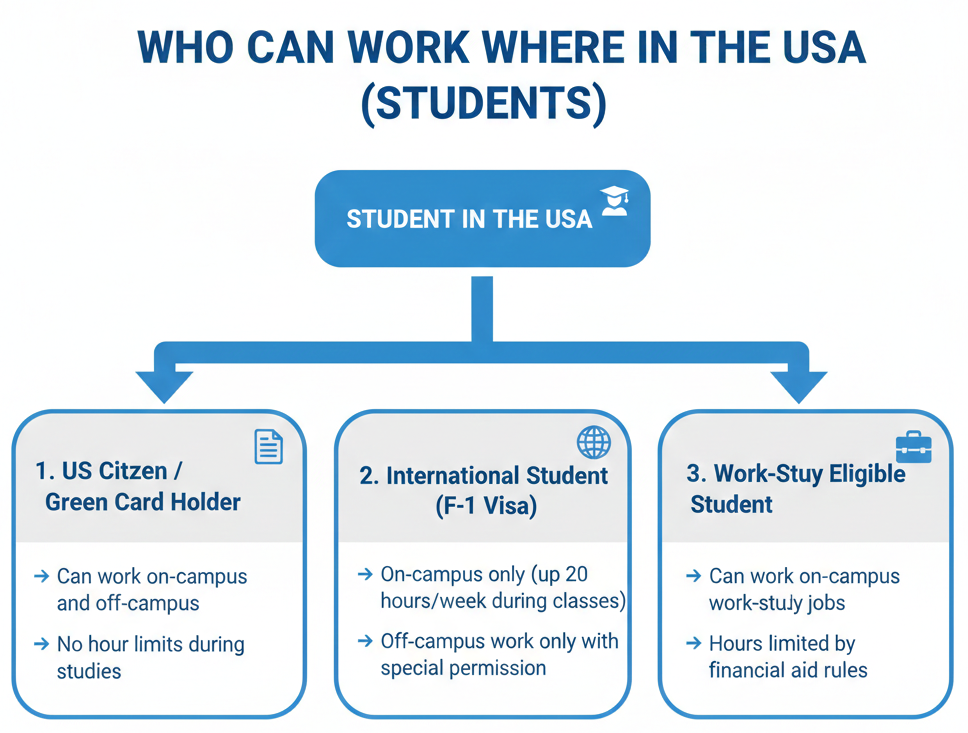
US citizens and permanent residents face fewer limits.
International students follow visa rules.
F-1 students usually work on campus first.
Campus jobs for international students
Campus jobs are the safest option for international students because they follow visa rules, limit hours to 20 per week during classes, and reduce travel time. These roles help cover basic costs while keeping academic focus intact.
Campus jobs sit close to classes.
Time wasted drops.
Supervisors understand exam stress.
Common campus roles include library assistant, lab helper, and cafeteria staff.
Pay stays modest but stable.
Work hours stay predictable.
These jobs suit first-year students best.
They ease adjustment stress.
Paperwork stays simple.
Work-study programs in the USA
Work-study programs in the USA provide part-time campus employment funded by federal aid, letting eligible students earn money while staying enrolled full-time. These jobs link income with education needs, making them reliable and structured.
Eligibility depends on financial aid forms.
Not every student qualifies.
Approval comes before job placement.
Work-study roles often relate to study fields.
That helps resumes later.
Hours stay capped.
Income won’t cover all expenses.
But it reduces loan pressure.
That relief matters.
Flexible jobs for college students off campus
Flexibility matters most.
Classes shift weekly.
Rigid jobs fail fast.
Flexible jobs for college students include retail, cafes, and delivery roles.
Evening and weekend shifts help.
Shift swaps add control.
Retail teaches people skills.
Food service builds speed.
Delivery work boosts time control.
Off-campus work requires legal clearance for international students.
Always confirm before applying.
Mistakes cost visas.
Online part-time jobs for students
Online part-time jobs for students allow income without travel, fixed shifts, or location limits, making them ideal for students juggling classes, exams, and personal schedules. These jobs focus on skills rather than physical presence.
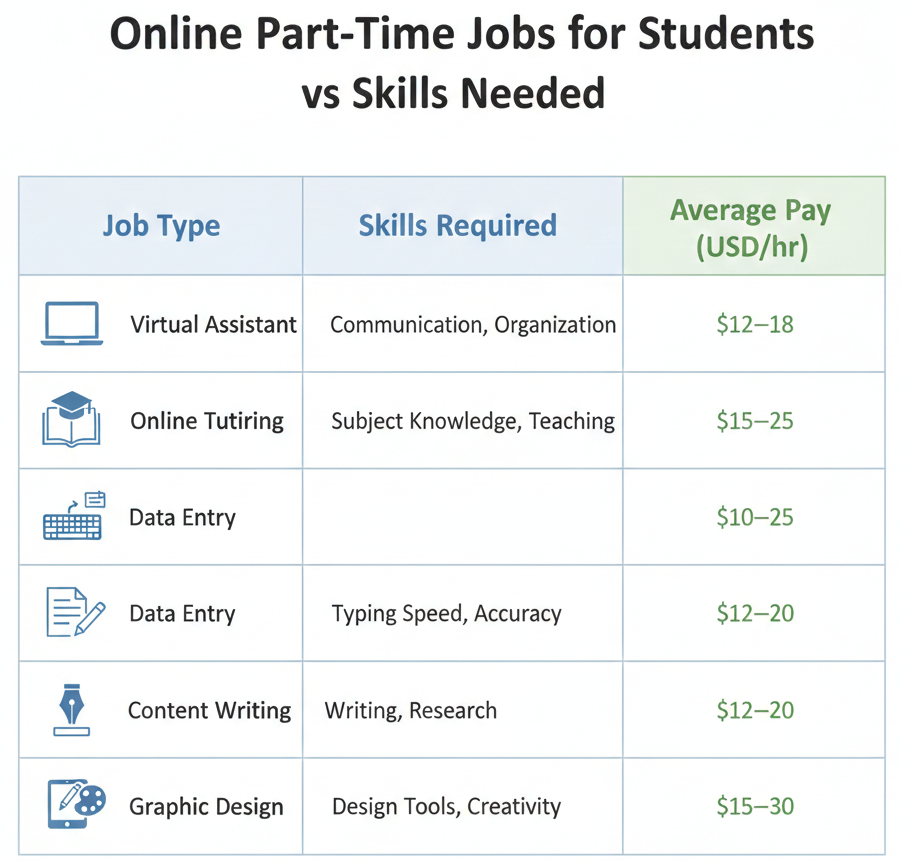
Popular online roles include virtual assistant, content support, tutoring, and data entry.
Pay varies by skill.
Internet reliability matters.
Online work saves commute time.
That energy returns to studies.
Stress stays lower.
Avoid fake offers.
If upfront fees appear, walk away.
Real jobs pay you, not the reverse.
Student work opportunities in the USA by skill level
Skill level shapes income.
No skill jobs exist.
Skill-based roles pay more.
Entry-level roles include store helper, cleaner, and food runner.
Training stays short.
Pay starts low.
Skill-based jobs include tutoring, design support, coding help, and writing tasks.
Pay rises faster.
Experience compounds.
Choose roles matching current skills.
Don’t chase stress.
Consistency beats chaos.
Best hourly pay part-time jobs for students
Pay matters.
Time is limited.
High hourly rates help.
Tutoring often pays well.
Tech support pays more with skills.
Campus research roles pay steadily.
Night shifts sometimes pay extra.
Weekend roles add bonuses.
Seasonal jobs spike earnings.
Balance pay with health.
Burnout kills grades.
Grades decide long-term income.
How many hours should a student work weekly
Most students perform best working 10 to 20 hours per week because this range supports income needs without harming academic performance or mental health. Studies show grades drop when weekly work exceeds 25 hours.
Start small.
Track energy levels.
Adjust after midterms.
During breaks, hours can increase.
Semester rules still apply.
Always check limits.
How to find part-time jobs fast
Speed matters when rent’s due.
Scatter-shot applying fails.
Focus wins.
Start with campus portals.
Visit offices directly.
Speak to supervisors.
Use local job boards.
Ask classmates.
Referrals beat cold applications.
Prepare a short resume.
One page only.
Clear availability helps.
Resume tips for student part-time jobs
Keep it clean.
Skip fancy layouts.
Clarity wins.
List availability clearly.
Mention past teamwork.
Highlight reliability.
No experience?
Add volunteer tasks.
Add class projects.
One typo kills chances.
Proofread twice.
Then apply.
Common mistakes students make with part-time jobs
Students chase money first.
Schedules collapse later.
That hurts grades.
Ignoring visa rules risks status loss.
Overworking drains focus.
Fake jobs steal time.
Planning avoids regret.
Read the rules early.
Ask before signing.
Balancing study work and health
Life’s a three-legged stool.
Remove one leg.
Everything falls.
Sleep protects memory.
Food fuels focus.
Breaks reset attention.
Use planners.
Block study time.
Protect exam weeks.
A tired brain costs more than missed shifts.
Tax basics for student workers
Income gets taxed.
Even part-time pay counts.
Ignoring taxes backfires.
Students receive W-2 or 1099 forms.
Filing deadlines matter.
Refunds often return money.
International students follow different tax rules.
Forms differ.
Help centers exist on campu
Real student story
I once met a student juggling two jobs.
Money came in.
Grades slipped fast.
After switching to a campus job, stress dropped.
Sleep returned.
Grades recovered.
Less work saved the semester.
Is part-time work worth it for students
Part-time work benefits students when job hours stay controlled, tasks match schedules, and legal rules are followed. It supports living costs, builds discipline, and adds early work exposure without replacing education priorities.
The goal isn’t just money.
It’s stability.
And control.
Choose smart.
Plan early.
Stay legal.
Where to start today
Start small.
Check campus job boards tonight.
List available hours.
Prepare one resume.
Apply to three roles.
Follow up politely.
Progress starts with action.
Not waiting.
Not hoping.
Final note on trust and usefulness
This guide avoids hype.
It reflects real student patterns.
Advice stays practical and tested.

